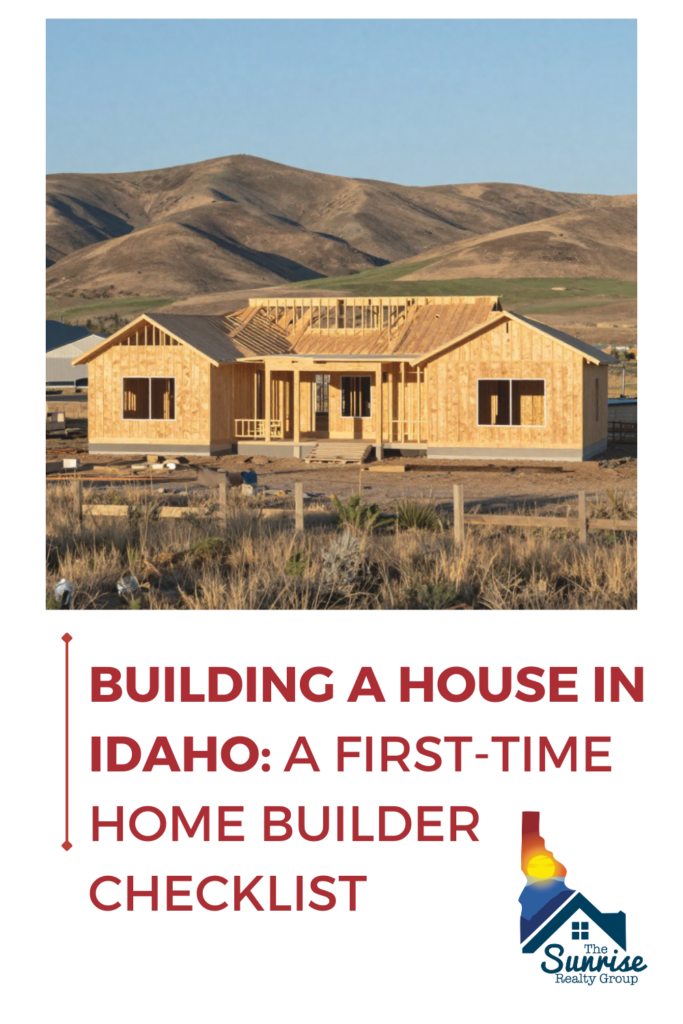
Building a House in Idaho: A First-Time Home Builder Checklist
Building a house in Idaho can be one of the most exciting ways to become a homeowner. Instead of choosing from existing homes, you have the opportunity to think about the land, layout, location, features, and long-term needs that matter most to you.
But building also introduces decisions that buyers of existing homes don’t usually have to make.
Before construction ever begins, you may need to evaluate land, establish a realistic total budget, understand financing, choose a builder, review zoning and site conditions, finalize plans, and work through local permitting requirements.
That’s why preparation matters.
This first-time home builder checklist breaks the process into manageable stages, from the first planning conversations through closing and move-in. Whether you’re considering a custom home on acreage, a modified floor plan, or new construction in a Treasure Valley community, these are the major questions to work through before you build.
Stage 1: Define the Project
1. Determine Your Building Goals
Before you start choosing floor plans or touring lots, decide what you actually want the finished property to accomplish.
Think about your:
- Preferred square footage
- Ideal number of bedrooms and bathrooms
- Single-story or multi-story living
- Home office needs
- Garage size
- RV or shop space
- Covered outdoor areas
- Guest or multi-generational living
- Accessibility and aging-in-place considerations
- Energy-efficient features
- Future expansion
- Yard and outdoor space
- Commute and location desires
Also consider whether you want a home in an established or new subdivision, a larger residential lot, or acreage.
These decisions influence far more than the floor plan. They can affect where you should look for land, which zoning districts work for your goals, utility requirements, site costs, and your overall construction budget.
The earlier you identify your priorities, the easier it becomes to distinguish between a true requirement and something that would simply be nice to have.
2. Establish a Realistic Total Budget
One of the biggest mistakes first-time builders make is thinking only about the price of the house itself.
Your total project budget may need to account for:
- Land
- Site preparation
- Excavation and grading
- Utility connections
- Well or septic systems when applicable
- Driveway or road access
- Surveying
- Engineering
- Architectural or design work
- Permits and applicable fees
- Builder labor
- Construction materials
- Interior selections and finishes
- Landscaping
- Financing and closing expenses
- Contingency funds
Land can look affordable until the cost of preparing it for construction is added.
A property that already has convenient utility access and relatively simple site conditions can represent a very different project from acreage requiring a well, septic system, extensive grading, or significant utility extensions.
Build the budget around the entire project, not just the house.
3. Talk With a Lender Early
Financing a new construction project can work differently from purchasing an existing house.
Depending on your circumstances and the type of home you’re building, options may include:
- Construction-to-permanent financing
- Construction loans
- Lot or land financing
- Conventional financing
- VA or rural housing options when eligible
- Homebuyer assistance programs when applicable
- A combination of cash and financing
Loan requirements vary considerably, so this is an area where you should work directly with a lender experienced in construction financing.
Getting preliminary financing information early also gives you a more realistic picture of your total budget before you commit to land, plans, or a builder.
Stage 2: Find and Evaluate the Land
4. Choose the Right Location
When you’re building a house in Idaho, location affects much more than commute time.
It can influence:
- Land prices
- Zoning
- Utility availability
- Road access
- Building requirements
- Site preparation
- Schools
- Fire protection
- Property taxes
- HOA requirements
- Future resale
- The type of home that makes sense on the property
Across the Treasure Valley, Boise, Meridian, Eagle, Kuna, Star, Nampa, Caldwell, Middleton, and surrounding areas can offer very different building environments.
Properties within city limits can also have very different requirements from land in unincorporated county areas.
Don’t evaluate a parcel based on scenery and acreage alone.
5. Verify That the Property Is Actually Buildable
A listing that says “buildable” should never replace your own due diligence.
Before purchasing land for a home, investigate items such as:
- Zoning
- Permitted residential uses
- Setbacks
- Easements
- Legal access
- Road requirements
- Water availability
- Sewer or septic requirements
- Electricity and other utilities
- Irrigation rights or infrastructure
- Flood or hillside considerations
- HOA or CC&R restrictions
- Lot dimensions
- Proposed home placement
Most importantly, evaluate the land based on what you intend to build.
A parcel may support a residence but still not support the house, shop, ADU, driveway configuration, or other improvements you have in mind.
6. Complete Appropriate Site Due Diligence
Depending on the property, additional investigation may include:
- Boundary survey
- Topographic survey
- Soil or geotechnical evaluation
- Septic feasibility or perc testing
- Well research
- Utility confirmation
- Environmental review
- Floodplain research
- Easement and title review
Not every property needs every test.
The right due diligence depends on the parcel, jurisdiction, proposed construction, and site conditions.
The goal is to uncover significant constraints before they become expensive construction problems.
Stage 3: Design the Home Around the Property
7. Choose Your Design Path
There are several ways to approach a new home.
Custom Home
A custom design is developed around your preferences, lifestyle, budget, and property.
This can offer the greatest flexibility but usually requires more planning and decision-making.
Modified Existing Plan
An existing home plan may be altered to accommodate your needs or property.
For some buyers, this provides a useful middle ground between full custom design and a predetermined builder plan.
Builder or Community Plan
Builders in new communities often offer established floor plans with available structural or finish options.
These can simplify portions of the process, although your choices may be limited by the builder, subdivision, lot, or architectural requirements.
There isn’t one correct approach.
The best option is the one that fits your priorities, property, financing, and budget.
8. Keep the Design Connected to the Budget
It’s surprisingly easy to design a home that exceeds the original budget.
Before plans become final, continue checking major decisions against:
- Total project budget
- Site costs
- Financing
- Foundation requirements
- Material selections
- Interior allowances
- Exterior features
- Landscaping
- Garage or shop additions
- Subdivision requirements
Changes that seem small individually can become significant when added together.
Keeping the builder, designer, lender, and other necessary professionals aligned early can reduce the chances of a major redesign later.
9. Complete Necessary Plans and Engineering
Before permits and construction can move forward, the project will need appropriate construction documents.
Depending on the home and jurisdiction, these may include:
- Site plan
- Architectural plans
- Structural details
- Foundation design
- Truss information
- Energy-related documentation
- Engineering
- Exterior elevations
- Other jurisdiction-specific documents
Requirements differ by location and project.
Your builder, designer, engineer, and local permitting authority should help identify what is required for your particular home.
Stage 4: Choose the Right Builder
10. Compare Builders Carefully
Price matters, but it shouldn’t be the only factor used to select a builder.
When comparing proposals, make sure you understand what each builder has actually included.
Ask about:
- Scope of work
- Materials
- Allowances
- Flooring
- Cabinets
- Plumbing fixtures
- Lighting
- Appliances
- HVAC
- Windows and doors
- Site work
- Landscaping
- Change orders
- Estimated construction schedule
- Warranty coverage
Two bids with very different prices may not actually include the same home.
11. Verify the Builder’s Background
Before signing a contract, investigate the builder.
Consider reviewing:
- Idaho contractor registration
- Insurance
- Experience
- Past projects
- References
- Customer reviews
- Warranty procedures
- Communication practices
- Subcontractor relationships
- Experience with your type of project
If possible, look at completed homes and current projects.
You aren’t simply hiring someone to construct walls and a roof. You’re choosing the company that will manage one of the largest financial projects you may ever undertake.
12. Understand the Construction Contract
The construction agreement should clearly address major aspects of the project, including:
- Scope of work
- Plans and specifications
- Included materials
- Allowances
- Payment schedule
- Change-order procedures
- Responsibilities
- Timeline expectations
- Delays
- Warranty provisions
Ask questions about anything you don’t understand before signing.
Ambiguity at the beginning of a construction project can become expensive later.
Stage 5: Permits and Pre-Construction
13. Determine Which Approvals Are Required
There isn’t one universal Idaho residential permitting process.
Requirements can vary depending on whether you’re building in Boise, Meridian, Eagle, Kuna, another municipality, or an unincorporated county area.
A project may involve approvals or permits related to:
- Building
- Planning or zoning
- Electrical work
- Plumbing
- Mechanical systems
- Septic
- Water or sewer connections
- Driveway or road access
- Fire requirements
- Erosion or site work
- Other location-specific conditions
Your builder will often manage much of this process, but buyers should still understand which approvals are necessary and whether they affect the schedule.
14. Complete Pre-Construction Planning
Before excavation begins, the project team may need to complete items such as:
- Final construction plans
- Permit approvals
- Site staking
- Excavation planning
- Utility coordination
- Material ordering
- Construction financing requirements
- Erosion-control measures
- Builder scheduling
This is where months of planning begin turning into an actual construction project.
Stage 6: Construction
15. Understand the Major Construction Phases
Every project is different, but a new home generally progresses through phases such as:
- Site preparation and excavation
- Foundation
- Framing
- Roofing
- Windows and exterior doors
- Rough plumbing
- Rough electrical
- HVAC
- Insulation
- Drywall
- Interior finishes
- Exterior finishes
- Fixtures and final installations
- Final inspections
Some phases overlap, and weather, materials, inspections, subcontractor schedules, design changes, and site conditions can all affect progress.
Instead of relying on a generic internet estimate for how long your house “should” take, ask your builder for a project-specific schedule and how delays or changes will be communicated.
Stage 7: Final Inspections and Move-In
16. Complete Required Final Inspections
As construction nears completion, the applicable building authority will inspect required portions of the project.
Final approval generally confirms that the home has satisfied applicable requirements necessary for occupancy.
Your builder should explain what still needs to occur before the home is ready for you to move in.
17. Conduct the Final Walk-Through
Don’t treat the final walk-through as a formality.
Take your time and inspect the finished home carefully.
Items to review can include:
- Doors
- Windows
- Cabinetry
- Flooring
- Paint and finishes
- Plumbing fixtures
- Electrical fixtures and outlets
- Appliances
- Exterior finishes
- Remaining repairs or touch-ups
Create a punch list of items that need attention and make sure you understand the builder’s process for completing them.
This is also a good time to review warranties, maintenance information, equipment instructions, and important shutoffs or systems within the home.
18. Complete Financing and Closing
The final financing process depends on how the construction was funded.
If you used construction-to-permanent financing, the construction phase may transition into the permanent mortgage according to the terms established with your lender.
Other financing arrangements may require different closing steps.
Your lender, builder, title professionals, and real estate agent should help you understand what remains before ownership and financing are finalized.
The Most Important Part of Building a House in Idaho Happens Before Construction
The physical build gets most of the attention, but many of the decisions that determine whether a project succeeds happen long before the foundation is poured.
For a first-time home builder, the biggest priorities are often:
- Establishing the full project budget
- Finding suitable land
- Verifying buildability
- Matching the home design to the property
- Choosing the right builder
- Understanding financing
- Identifying local requirements early
- Leaving room for unexpected costs and decisions
A beautiful piece of land isn’t necessarily the right building lot.
A floor plan you love isn’t necessarily right for every property.
And the lowest construction bid isn’t necessarily the best value.
The goal is to make the pieces work together.
Planning a New Construction Home in the Treasure Valley?
If you’re thinking about building a home in Boise or elsewhere in the Treasure Valley, you don’t have to begin by randomly searching for land, builders, and floor plans on your own.
Sunrise Realty Group helps buyers look at the entire process—from finding the right property to understanding how the land fits the home they want to create.
Our 3-One Method connects the three major pieces of the journey: land, home design, and builder, with one clear path toward closing.
The earlier those pieces come together, the easier it becomes to make informed decisions before you’ve committed money to the wrong property or plan.
If you’re considering building a house in Idaho, start with the land, the budget, and the bigger picture.
Then build from there.
Leave a Reply