Part 2 of the series: How the Building Approval Process Actually Works in Idaho
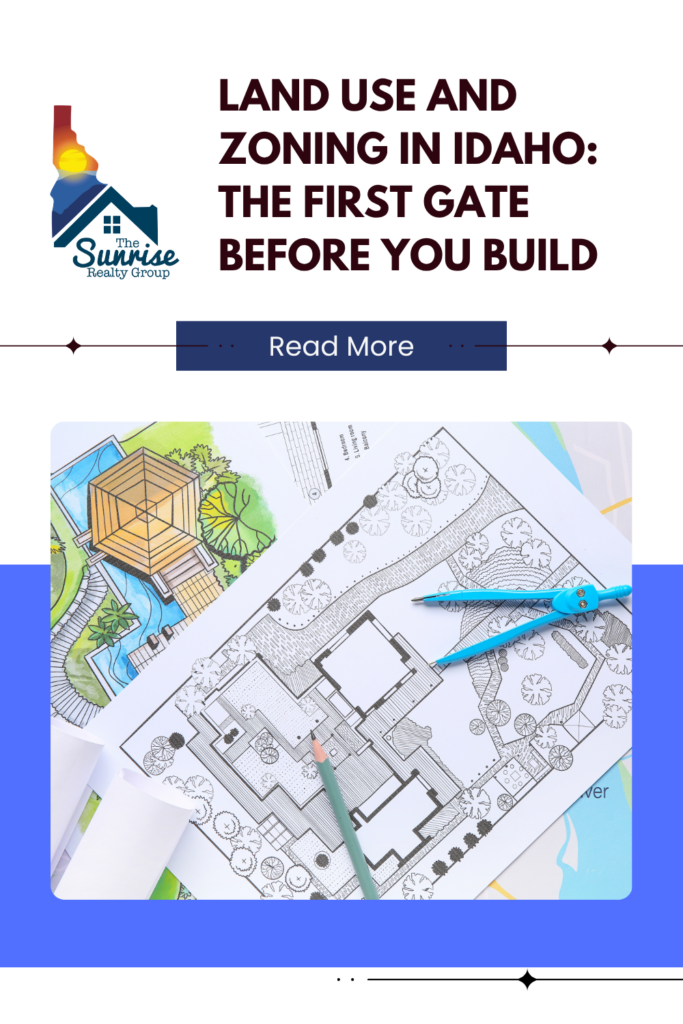
Land use and zoning are Idaho’s first approval step before design, engineering, permits, or construction.
Before considering structural calculations or plans, one question matters: Is this kind of building allowed here?
This question seems simple, but it’s one of the most important questions buyers, builders, or investors can ask.
If zoning does not permit the proposed use, the project cannot proceed as planned. The quality of the design, the status of financing, or having a builder ready do not matter; the use must first be allowed.
Many projects encounter issues because people assume zoning labels (like “residential”) permit any such use or that a large parcel supports their intended idea. Zoning specifies much more.
This article explains what land use and zoning actually control, who enforces those rules, and why this step should be resolved before a buyer spends serious money on plans or moves too far into a purchase.
What Land Use and Zoning in Idaho Really Control
Zoning is a legal framework. It is not a casual suggestion or a design preference.
Local governments use zoning ordinances and zoning maps to divide land into districts. Each district has rules that determine how the land can be used, how intensely it can be developed, and what physical limits apply to structures.
In plain language, zoning answers questions like:
- What can be built here?
- How many units are allowed?
- How close can the building sit to the property line?
- How tall can the structure be?
- How much of the lot can be covered?
- Does this use require extra approval?
- Are there overlays or special restrictions on the property?
Zoning isn’t just about labeling land—it controls critical project details that determine feasibility.
Buyers, especially land buyers, must check this early. A property can look buildable online, but have zoning limits that change the plan.
Who Controls Zoning Decisions?
The property’s location determines the zoning authority.
Inside city limits, zoning is typically handled by the city’s planning and zoning department. Outside city limits, the county planning department is usually the starting point. In some areas, especially near growing cities, the property may also fall within a city’s impact area or involve more than one reviewing authority.
The people and boards involved may include:
- Planning technicians
- Zoning planners
- Planning directors
- Planning and zoning commissions
- City councils
- County commissioners
Not all projects go to every group. If a project clearly meets zoning requirements, it can be handled administratively. More complex projects may require a public hearing, a conditional use permit, a variance, subdivision review, or a rezone.
Zoning decisions follow a distinct process. A single recommendation doesn’t equal final approval. Buyers must know who has authority, which process applies, and if the answer is just guidance or an actual approval.
Allowed Uses Come First
The first thing to check is whether the intended use is allowed.
Every zoning district has rules that categorize uses. The exact wording varies by jurisdiction, but most use tables to identify uses as:
- Permitted by right
- Allowed with conditions
- Allowed only through a special approval process
- Prohibited
This is where many assumptions fall apart.
A property may allow a single-family home but not a duplex. Another may allow agriculture but limit accessory dwellings. Another may allow a shop only if it is accessory to a primary residence. A home business may be allowed at a basic level, but requires more review if it creates traffic, parking, signage, employees, or customer visits.
For residential land, zoning may affect whether you can build:
- A single-family home
- A duplex or multi-family structure
- An ADU
- A detached shop
- Agricultural buildings
- A home-based business
- Multiple dwellings
- A short-term rental, depending on local rules
If the intended use isn’t allowed, design considerations like setbacks and floor plans don’t matter until approval is secured.
Density and Intensity Can Change the Value of Land
Zoning also controls how intensely land can be developed.
This is especially important for buyers who are looking at acreage, infill lots, investment property, or land with future subdivision potential. A parcel may appear large enough for several homes, but zoning may permit only one dwelling. Another parcel may support higher density, but only if subdivision, access, utilities, and infrastructure requirements are also met.
Common density and intensity rules include:
- Maximum dwelling units per acre
- Minimum lot size
- Minimum lot width
- Minimum frontage
- Lot coverage limits
- Open space requirements
- Parking requirements
This is where buyers need to be careful with “potential.”
A listing may state development potential, but only zoning rules and needed approvals determine what is possible, not just the land size.
Setbacks, Height, and Lot Coverage Shape the Buildable Area
Even when the use is allowed, zoning still affects where the building can sit and how large it can be.
Setbacks are the required distances between a structure and the property lines. Most zoning codes include front, side, and rear setbacks. Corner lots may have additional street-side setbacks. Properties near certain roads, waterways, irrigation features, or other uses may have additional buffers.
Zoning may also control:
- Maximum building height
- Maximum lot coverage
- Accessory structure placement
- Parking location
- Driveway access
- Screening or buffering
- Open space
These rules establish the buildable envelope—the area where construction is permitted.
This is why many areas can be zoned. This is why many areas may be zoned for residential use yet remain difficult to build on. A narrow, irregular, or sloped lot, or one with easements, may technically allow a home but leave very little usable space after restrictions are applied. Buyers should understand the buildable envelope. Otherwise, they may fall in love with a floor plan that does not actually fit the property.
Overlay Zones: Add Another Layer
Base zoning is not always the full story.
Some properties are affected by overlay zones or special districts. These are extra rules layered on top of the standard zoning district. They may not replace the base zoning, but they can add stricter requirements.
Common overlays and special restrictions in Idaho may involve:
- Floodplain or floodway areas
- Hillside or steep-slope areas
- Wildland-Urban Interface concerns
- Airport influence areas
- Historic or design review districts
- Planned Unit Developments
- Wetlands or riparian buffers
- Sensitive lands
Overlay rules matter because they often bring additional review, engineering, documentation, or design limits.
A hillside lot may need slope analysis. A floodplain property may require elevation or floodplain review. A property in a WUI area may raise concerns about fire access or defensible space. A PUD may have its own development standards that differ from the base zoning district.
Buyers shouldn’t stop at the zoning label. The base district is only part of the story—overlays can change requirements.
Zoning Approval Is Not Always Automatic
Some projects clear zoning cleanly. Others need additional steps.
If the proposed use and design comply with the zoning rules, planning staff may issue zoning clearance or approve the zoning portion administratively. That is the simplest path.
But many projects are not that simple.
Depending on the property and the proposal, the owner may need one of several approval pathways.
Zoning Clearance
Zoning clearance means the planning department has reviewed the proposal for compliance with zoning requirements. If the use, setbacks, height, lot coverage, parking, and other applicable rules are satisfied, the project may move forward to the next approval layer.
This is the cleanest result, but it depends on the project fitting the rules as written.
Variances
A variance is a request for relief from a zoning standard.
For example, a property owner may request a reduced setback, increased height, or a lot coverage adjustment. Variances are not automatic, and they are not meant to solve basic preference issues.
In many jurisdictions, a variance requires the applicant to show hardship or unique property conditions. Wanting a larger building, a better view, or a more convenient layout is usually not enough on its own.
Conditional Use Permits
A conditional use permit applies when a zoning district allows a use only if additional review and conditions are satisfied.
This often involves uses that may be appropriate in some locations but require more scrutiny due to traffic, parking, neighborhood impact, scale, noise, hours of operation, or infrastructure needs.
Examples may include certain multi-family projects, some accessory structures, expanded home occupations, or uses that do not cleanly fit into a single permitted category.
Conditional use permits may involve public hearings and discretionary review. That means timeline and outcome risk should be taken seriously.
Rezoning
If the desired use is not allowed under the current zoning, the only path may be a rezone.
Rezoning is a much bigger step. It changes the zoning classification itself and often involves a legislative process. That means public hearings, staff review, political discretion, and no guaranteed outcome.
For buyers, this is a major risk point. A property that only works if it gets rezoned should be evaluated very differently from a property where the intended use is already allowed.
Why Zoning Stops So Many Projects
Zoning stops projects because buyers often treat it as a formality.
It is not.
Projects commonly run into trouble because:
- Buyers assume “residential” means any residential use.
- Sellers misunderstand or overstate what is allowed.
- Online parcel data is incomplete or misread.
- Overlay restrictions are missed.
- Density assumptions are wrong.
- Setbacks shrink the usable building area.
- Variance standards are underestimated.
- Private restrictions are confused with public zoning.
- Approval timelines are not factored into the purchase.
These issues become more painful after money has already been spent.
A buyer who discovers a zoning problem before closing still has options. A buyer who discovers it after buying the land may be stuck redesigning the project, applying for discretionary approvals, or reconsidering the property’s intended use altogether.
What Buyers Should Confirm Before Moving Forward
Before buying land or designing a building, buyers should confirm the zoning basics in writing whenever possible.
Start with these questions:
- What is the zoning district?
- Which jurisdiction controls the property?
- Is the intended use allowed?
- Is the use permitted by right or conditional?
- Are there density limits?
- What setbacks apply?
- What height limits apply?
- Are there overlays or special districts?
- Does the project need a variance, conditional use permit, or rezone?
- Are there private restrictions, easements, or plat notes that also affect the property?
That last question matters because zoning is not the only restriction. Easements, CC&Rs, subdivision notes, title conditions, access agreements, and utility limitations can all affect buildability.
Zoning is the first gate, but it is not the only gate.
The Key Takeaway
Land use and zoning in Idaho should be addressed before buyers get too far into design, financing, permitting, or construction.
Zoning determines whether the proposed use is allowed. It also shapes density, setbacks, height, lot coverage, overlay review, and the approval path.
In other words, zoning decides whether the rest of the process is worth pursuing.
For buyers in Boise, the Treasure Valley, or elsewhere in Idaho, the safest approach is to slow down early. Confirm the zoning district. Read the use table. Ask the planning department the right questions. Understand whether the project is permitted, conditional, or dependent on a higher-risk approval.
That early work may not feel exciting, but it can prevent expensive redesigns, delayed permits, or a land purchase that does not match the buyer’s actual plan.
Building in Idaho? Start With Zoning
If you are buying land, comparing lots, planning a custom home, or exploring a future build in Boise or the Treasure Valley, zoning should be one of the first conversations you have.
Sunrise Realty Group helps buyers think through those early questions before they get too deep into a purchase or project. From land search and property strategy to builder coordination and local real estate guidance, the goal is simple: fewer surprises, better questions, and a clearer path forward.
In the next post, we’ll address a closely related issue that surprises many land buyers: whether the lot legally exists, has proper access, and is actually buildable.