If you’re planning to buy a home in Idaho, you’ve probably heard the term closing costs. For many first-time buyers, these expenses can come as a surprise because they are separate from the home’s purchase price and your down payment. Understanding what closing costs are before you begin shopping for a home can help you prepare financially and make the buying process much less stressful.
What Are Closing Costs?
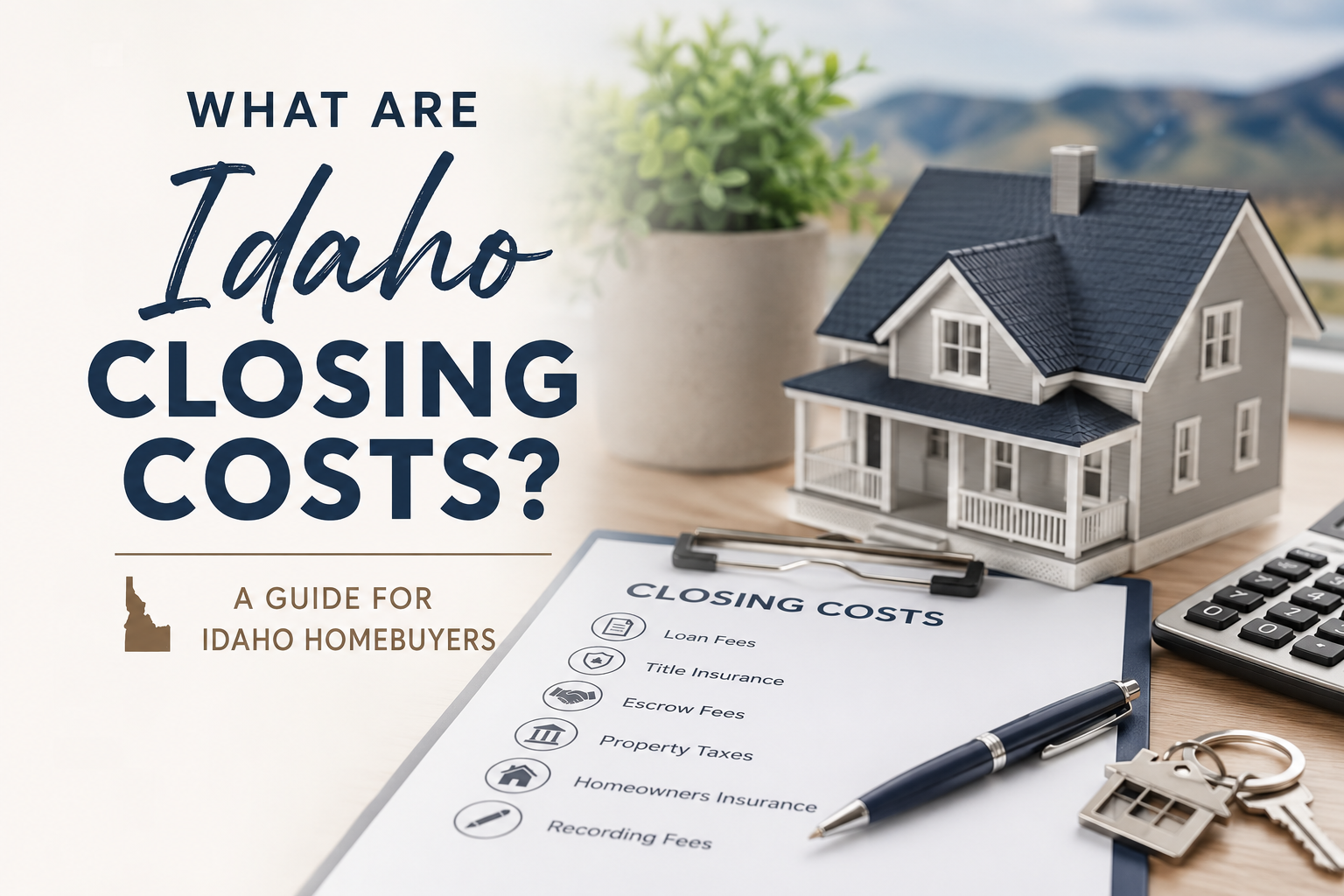
Closing costs are the collection of fees and expenses that are paid when the purchase of a home is finalized. They cover the services and administrative work required to transfer ownership from the seller to the buyer and complete the mortgage process.
Rather than being a single fee, closing costs include several different charges that are paid to various professionals and organizations involved in the transaction.
What Do Closing Costs Pay For?
Depending on your purchase, closing costs may include expenses such as:
Loan processing by your lender
Property appraisal
Title search and title insurance
Escrow services
Recording the new ownership with the county
Homeowners insurance
Property taxes and prepaid interest
Homeowners association fees, if applicable
Each of these plays an important role in ensuring your home purchase is completed legally, accurately, and with as few surprises as possible.
Why Do Closing Costs Matter?
Many buyers spend months or even years saving for a down payment but don’t realize they will also need to account for closing costs. Planning for these expenses early can help prevent delays and make the closing process much smoother.
Knowing about closing costs also allows you to have informed conversations with your lender and real estate agent so you understand exactly what you’re paying for and why.
Can Closing Costs Be Negotiated?
In many cases, yes.
Depending on the terms of the purchase agreement and current market conditions, buyers and sellers may negotiate who pays for certain expenses. A seller may agree to contribute toward some closing costs as part of the negotiation, or a lender may offer credits that help reduce the amount you pay at closing.
Every transaction is different, which is why having experienced professionals representing you can make a significant difference.
Are Closing Costs the Same as a Down Payment?
No. These are two separate parts of purchasing a home.
A down payment is the portion of the home’s purchase price that you contribute toward the purchase. Closing costs, on the other hand, pay for the services required to complete the transaction and finalize your loan.
Because they serve different purposes, it’s important to plan for both when preparing to buy a home.
When Will I Know What My Closing Costs Are?
Your lender will provide documents throughout the loan process that outline the expected costs associated with your purchase. As your closing date approaches, you’ll receive a detailed breakdown showing each expense and explaining what it covers.
Reviewing these documents carefully gives you the opportunity to ask questions and fully understand your financial responsibilities before signing the final paperwork.
How Can I Prepare for Closing Costs?
The best way to prepare is to discuss them with your lender and real estate agent as early as possible. They can help you understand which costs are typical for your transaction, explain the purpose of each fee, and identify any opportunities to negotiate.
Planning ahead allows you to focus on the excitement of buying a home rather than worrying about unexpected expenses during the final stages of the process.
Final Thoughts
Closing costs are a normal part of buying a home in Idaho and represent the work that goes into making your purchase secure, legal, and complete. While they can seem overwhelming at first, understanding what they are and why they exist makes the home-buying process much easier to navigate.
Whether you’re purchasing your first home or your next home, having knowledgeable professionals by your side can help ensure you know what to expect every step of the way. With the right guidance and preparation, you’ll be ready to move into your new home with confidence.
The short answer is no—you are not legally required to hire a real estate agent to buy a home in Idaho. Many people successfully purchase homes on their own every year. That said, having the right professional in your corner can make the process significantly smoother and help you avoid costly mistakes.
Buying a home is one of the largest financial decisions most people will ever make. Beyond finding a property you love, there are contracts, inspections, financing deadlines, negotiations, title work, disclosures, and closing requirements that all need to be managed carefully. Missing a single detail can create unnecessary stress or expenses.
A good real estate agent acts as your guide and advocate throughout the entire process. They can help you understand current market conditions, determine a competitive offer price, negotiate repairs or concessions, and coordinate with lenders, title companies, inspectors, and other professionals involved in the transaction.
In Idaho, local knowledge matters. Every community has its own nuances when it comes to growth, development, zoning, schools, utilities, and future plans. Whether you’re buying in Boise, Meridian, Eagle, Nampa, Caldwell, or a more rural area, having someone who understands the local market can provide valuable insight that online listings simply cannot.
This is especially true for buyers interested in land or new construction. Understanding things like well and septic requirements, CCRs, building restrictions, impact fees, and permitting processes can be overwhelming without experienced guidance.
Ultimately, you don’t need a real estate agent to buy a home—but for many buyers, having a trusted professional by their side provides peace of mind, saves time, and helps them make more confident decisions throughout the journey.
If you’re thinking about building a new home in Idaho, one of the first big decisions you’ll face is which path to take in the custom vs semi-custom vs production home conversation.
In other words: do you want a fully custom home designed from a blank slate, a semi-custom home based on an existing floor plan, or a production (spec) home built by a tract builder in a planned community?
Each type of home offers a different level of design flexibility, cost, and involvement in the home-building process. Understanding those differences clearly can help you make an informed decision that better aligns with your budget, timeline, and your family’s needs.
This guide breaks down each type of home in clear, simple terms—so you can decide which option is the best fit for your lifestyle and long-term goals in the Treasure Valley.
What Is a Production Home?
A production home is the simplest and most affordable type of new construction. Production homes are typically built by tract builders (CBH Homes, Hubble Homes, Lennar, etc.) who are large production home builders who work from a set of pre-designed floor plans in a subdivision or master-planned community.
Instead of starting with a blank slate, you choose from a set of standard floor plans offered by the builder. This allows the builder to streamline the construction process, control costs, and deliver high-quality homes at lower prices with less time from contract to move-in.
Key Features of a Production Home
Production homes usually share several characteristics:
A set of floor plans or house plans to choose from
Pre-designed structural layouts with less flexibility for changes
Standard finishes with upgrade packages for things like countertops, flooring, or paint colors
A predictable construction process with defined stages and timelines
Often built on smaller or uniform lots within the same neighborhood
Energy efficiency measures are commonly included as part of the builder’s standard package
Many production builds are also referred to as spec homes or spec houses, especially when the builder starts construction before a specific buyer is under contract.
Who a Production Home Is Best Suited For
A production house is often the right choice for a:
Home buyer with a strict budget who still wants a new home
Buyers who prefer a move-in-ready home with fewer decisions to make
Families that want to be in a specific subdivision, school district, or community with amenities
Buyer who values a streamlined path and doesn’t need a high level of personalization
For many people, production homes are an attractive option because they offer a lower cost of entry into new home construction and a shorter amount of time between signing a contract and receiving the keys.
Pros of a Production Home
Lower cost compared to custom and many semi-custom builds
The fastest build time of the three options
Fewer decisions, which means less design fatigue
Clear base price and upgrade options upfront
Cons of a Production Home
Limited design flexibility and structural changes
Less control over specific design elements or special features
Many homes in the community may share similar home designs and exterior materials
What Is a Semi-Custom Home?
A semi-custom home sits in the middle of the custom vs semi-custom vs production home spectrum. It blends flexibility with structure, and it’s often the best route for buyers who want more personalization than a production home—but don’t need the complete freedom (or full cost) of a true custom home.
With a semi-custom home, you usually start with an existing floor plan from a semi-custom builder and then adjust it to your specific needs.
Key Features of a Semi-Custom Home
Semi-custom builds typically include:
A library of pre-designed floor plans or house plans to start from
The ability to make layout changes, such as moving walls, adding a bedroom, or reconfiguring the kitchen
A wider range of design options for finishes, fixtures, and exterior materials
More involvement in the design process, especially in the design phase
A mid-range price point between production and fully custom homes
You’ll work with a design team or semi-custom builder to ensure the home’s construction reflects your lifestyle, specific needs, and price range.
Who a Semi-Custom Home Is Best For
A semi-custom home is often the best fit for:
Buyers who want a more personalized home without going all-in on a fully custom build
Families who have specific ideas about layout and storage but don’t need complete control over every detail
People who want a smoother, more structured process than a full custom project, but more design freedom than production homes
Pros of a Semi-Custom Home
Greater level of personalization than production homes
The ability to adapt an existing floor plan to your family’s needs
A clearer starting point for budget and timeline than a complete custom build
Often, a good “middle ground” for many home buyers
Cons of a Semi-Custom Home
More decisions to make than with a production home
Significant changes or structural changes can add additional cost.
The build may still take more time than a production home, especially if you request many modifications.
What Is a Custom Home?
A custom home offers the highest level of customization—and the most design freedom—among the three options. Here, you’re not starting with a standard plan or existing floor plan; you’re working with a custom home builder or design-build team to create a fully custom home from the ground up.
Custom home projects usually start with a blank slate: your land, your ideas, and a design team that helps shape them into a complete set of house plans.
Key Features of a Custom Home
With a whole custom home, you can expect:
A fully original floor plan and architectural style
Complete control over room sizes, layout, and overall square footage design
The chance to incorporate specific design elements, special features, and unique home concepts
Tailored solutions to your land, views, and topography—especially if you own land already
The ability to specify exterior materials, energy efficiency features, and final finishes
Custom home building is ideal for buyers who want their dream home to reflect a clear vision and specific needs that standard plans can’t meet.
Who a Custom Home Is Best For
A true custom home is often the right choice when:
You already own land or want to choose the land first and design around it.
You have detailed ideas about layout, architectural style, and special features.
You’re comfortable with a longer design-build process and a higher overall budget.
You want a one-of-a-kind home that doesn’t look like anything else in your neighborhood.
Pros of a Custom Home
Complete control over the design process and final product
The highest level of personalization in layout, finishes, and performance features
Optimized use of your land, views, and site conditions
Potential for higher long-term value when done well
Cons of a Custom Home
Typically, the highest cost and most extensive price range
The amount of time from the first decision to move-in is usually the longest.
Requires close coordination between your custom builder, design team, and lender
More decisions and more complexity throughout the construction process
Custom vs Semi-Custom vs Production Home: Side-by-Side Comparison
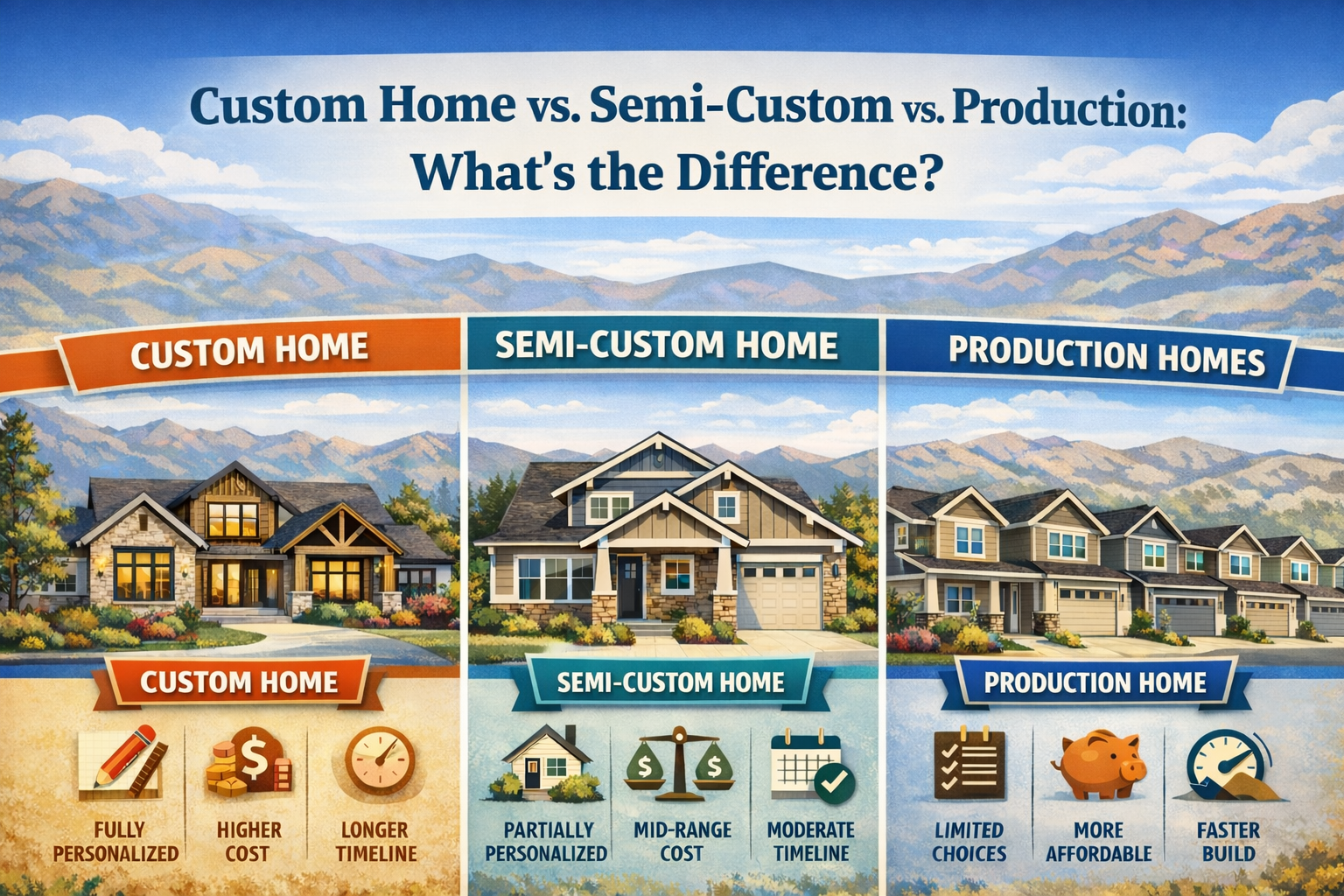
When you line up custom vs semi custom vs production home options, the differences become clearer. Here’s a simplified way to think about them:
Feature
Production Home
Semi-Custom Home
Custom Home
Cost
Lowest base price / lower cost
Mid-range, depends on changes
Highest, widest price range
Design Flexibility
Lowest design flexibility
Moderate level of customization
Unlimited design freedom
Timeline
Fastest / less time
Moderate
Longest amount of time
Floor Plans
Fixed set of floor plans
Pre-designed floor plans with modifications
Fully original plans
Decisions
Fewer decisions to make
More decisions, guided by builder
Most decisions across all phases
Best For
Budget-focused, move-in ready buyers
Buyers wanting balance between cost & customization
Choosing between custom vs semi-custom vs production home options is one of the first—and most important—decisions in the home construction journey.
There’s no single “right decision” that applies to everyone; instead, the best fit depends on your:
Budget and long-term goals
Desired level of design freedom
Willingness to be involved in the design process
Timeline for moving into your new home
Idaho’s growing market offers all three paths, from production homes in master-planned communities to semi-custom builds and full custom home design on acreage or view lots.
If you’d like expert guidance on which type of builder and which type of home is the best route for your situation, Sunrise Realty Group can help you sort through your options, clarify your priorities, and move confidently toward the home of your dreams.