Category: Buying Land

  • How to Analyze Zoning Before You Buy Land: A Practical Due Diligence Guide

    Zoning Series — Part 6

    Analyze zoning before buying land in Idaho. A parcel may appear perfect online, but still have limits on what, where, or whether you can build.

    Zoning mistakes are not obvious at first. They usually do not appear in listing photos or a quick conversation with a seller, agent, or neighbor.

    A property may have the right acreage, view, location, and nearby homes. Then deeper questions arise.

    Can you actually build the type of structure you want there? Is the use allowed? Are there setbacks, overlays, easements, or access issues? Would the project require a variance, a conditional use permit, subdivision approval, or a public hearing?

    That is why zoning due diligence is necessary before spending money on plans, surveys, engineering, or design. Zoning is not the only factor in whether land is buildable, but buyers should check it first before committing.

    This guide walks through a practical process for buyers, builders, and investors who want to understand the rules before buying land or designing a project.

    Why You Should Analyze Zoning Before You Buy Land

    Land is marketed in broad, optimistic language like “great building site,” “development potential,” or “ideal for a custom home.”

    Those phrases are not proof.

    They may be accurate, but still must be checked against the property’s zoning, jurisdiction, land-use rules, title, access, utilities, and approvals.

    The goal is not to master zoning overnight but to catch obvious issues early and know when to seek a professional before a small assumption becomes expensive.

    For buyers in Boise, the Treasure Valley, or Idaho, analyze zoning early. Delaying until after closing, design meetings, or builder estimates can turn a fixable issue into a costly problem.

    Step 1: Confirm the Exact Zoning Classification

    Start with the official zoning designation.

    Do not rely on the listing, the seller’s memory, or appearances. Zoning can change from parcel to parcel. One property may have a nonconforming use, a grandfathered structure, or special approval not applicable next door.

    In the beginning, start by confirming three things:

    • The zoning district name
    • The zoning code section
    • The jurisdiction that controls the property

    That last point matters. A property may be in a city, county, or an area where multiple agencies have authority. In the Treasure Valley, this is especially confusing when it comes to limits, impact areas, rural parcels, and properties near growing communities.

    Before you move further, make sure you know whose rules you are reading.

    Step 2: Read the Use Table Before Anything Else

    Once you know the zoning, go straight to the use table.

    Buyers often skip straight to setbacks, building size, or design, but none of them matter if the intended use is not allowed.

    Look for whether your intended use is:

    • Allowed by right
    • Allowed with conditions
    • Allowed only through a special process
    • Not allowed at all

    Check if you can build a single-family home, add an ADU, build a shop, run a home business, add more dwellings, or use it for agriculture, rental, commercial, or mixed use.

    If the use is not explicitly allowed, pause the purchase conversation until you better understand the path forward.

    Sometimes the answer is simple, but other times, it requires a conversation with the planning department or indicates the property does not fit the plan.

    Step 3: Check Density and Lot Requirements

    Acreage alone does not decide what can be built.

    This is a common misunderstanding among buyers. A large parcel may still be limited in the number of homes, units, or lots it can support. Density is governed by zoning, subdivision rules, access, infrastructure, and sometimes health district requirements.

    Check for:

    • Minimum lot size
    • Minimum lot width or frontage
    • Maximum number of dwellings
    • Allowed accessory dwelling units
    • Subdivision rules
    • Lot coverage limits
    • Access or road frontage requirements

    This step is especially important if you are thinking about future development.

    For example, a buyer may see a five-acre parcel and assume it can be split into several lots. Maybe. It depends on zoning, subdivision rules, access, utilities, and approvals.

    “Big enough” is not the same as “allowed.”

    Step 4: Find the Buildable Envelope

    After confirming the use and density rules, figure out where a structure could physically go.

    This is called the buildable envelope. It is the part of the property where construction may be allowed, subject to setbacks and restrictions.

    Review:

    • Front setbacks
    • Side setbacks
    • Rear setbacks
    • Street-side setbacks on corner lots
    • Buffers from other zones or uses
    • Easements
    • Floodplain areas
    • Drainage areas
    • Environmental buffers
    • Irrigation features
    • Access requirements

    A lot that looked wide open may feel much smaller after these checks.

    A property may allow a home, but the buildable area might be limited by setbacks, easements, slopes, flood boundaries, or road access. The best spot may not be legal or practical to build.

    Before designing anything, get a realistic sense of where the structure could sit.

    Step 5: Verify Height and Massing Limits

    Height limits can cause problems late in design if unchecked early.

    This matters for two-story homes, sloped lots, bonus rooms, garages with living space, view properties, and custom designs with taller rooflines.

    Confirm:

    • Maximum building height
    • How height is measured
    • Whether the slope affects the calculation
    • Roof pitch rules
    • Architectural projection limits
    • Accessory structure height limits
    • Any special hillside or design overlay rules

    The phrase “maximum height” sounds simple, but different jurisdictions may measure height differently. Some measure from natural grade. Some use the average grade. Some have special rules for sloped lots or roof types.

    Key takeaway: Check how height is measured to prevent costly design revisions later.

    Step 6: Look for Overlay Zones

    Overlay zones are extra rules added to the base zoning district.

    A property may have standard zoning and still fall under an overlay that changes what can happen.

    Common examples include:

    • Floodplain or floodway areas
    • Hillside or steep-slope overlays
    • Wildfire or fire hazard areas
    • Wetlands or riparian buffers
    • Historic districts
    • Design review areas
    • Airport or noise overlays
    • Sensitive lands

    Overlay zones may not block a project, but can add reviews, reports, engineering, limits, or extra approvals.

    Takeaway: Overlay zones can increase project costs and approval steps, so investigate overlays early.

    A buyer looking at a beautiful hillside lot, river-adjacent parcel, or rural property near open land should be especially careful here. The setting may be exactly what makes the property attractive, but it may also be what triggers extra review.

    Step 7: Review Easements, Plat Notes, and Title Issues

    Zoning shows public rules, not every restriction.

    That is why titles and recorded documents matter.

    Before assuming where you can build, review:

    • The recorded plat
    • Title report
    • Utility easements
    • Drainage easements
    • Access easements
    • Irrigation easements
    • Shared driveway agreements
    • Private road agreements
    • Subdivision notes
    • Survey information, if available

    An easement can block construction even when zoning allows. A plat note may create limits that are easy to miss. Shared road or access issues may affect financing, permitting, or development.

    Takeaway: Professional reviews of title, surveys, and easements help avoid hidden pitfalls.

    Step 8: Check HOA and Private Restrictions

    If in a subdivision or private development, zoning is only part of the story.

    Review the CC&Rs, architectural rules, and design review process before assuming your plan will be allowed.

    An HOA or private review board may control:

    • Exterior materials
    • Roof pitch
    • Fence style
    • Detached shops
    • ADUs
    • Short-term rentals
    • Landscaping
    • Driveway design
    • Outbuilding placement
    • Architectural style

    Private restrictions can be stricter than zoning. They cannot override public rules, but can add approval layers.

    Key takeaway: HOA approval is not guaranteed by public permits; always check private restrictions.

    Step 9: Confirm Utilities and Infrastructure

    Zoning may allow a structure, but infrastructure still dictates what is realistic.

    Before buying land, confirm the practical pieces:

    • Water availability
    • Sewer connection or septic feasibility
    • Power access
    • Gas availability, if needed
    • Road access
    • Fire access
    • Emergency vehicle access
    • Drainage requirements
    • Irrigation considerations
    • Internet or communication service, if important

    Some seem basic until missing.

    A parcel may look affordable because the expensive work has not been done yet. Extending utilities, improving a road, drilling a well, adding a septic system, addressing drainage, or meeting fire access requirements can change the property’s real cost.

    Final takeaway: Combine zoning and infrastructure checks to fully understand project feasibility before buying.

    Step 10: Understand the Approval Path

    The final step is to understand the level of risk built into the approval process.

    Some projects are allowed by right. That usually means the use is permitted if the project meets the applicable standards.

    Other projects require additional review. That may include administrative approval, a conditional use permit, a variance, a subdivision application, a design review, or a public hearing.

    Ask:

    • Does the project require a variance?
    • Is a conditional use permit needed?
    • Will there be a public hearing?
    • Can neighbors appeal?
    • Is subdivision approval required?
    • Is the approval administrative or discretionary?
    • What happens if the request is denied?

    This is where timeline and outcome risk come in.

    A property that only works if several approvals go your way is not the same as a property where the intended use is already allowed. That difference should affect how you evaluate price, timing, financing, and whether the deal makes sense.

    Red Flags That Should Make Buyers Pause

    Not every red flag means “walk away.” Some simply mean “slow down and verify.”

    Be careful when you see:

    • The intended use is not clearly allowed.
    • The plan depends on future rezoning.
    • The seller is relying on what nearby properties have done.
    • The project needs a variance for basic design elements.
    • The listing does not mention overlays.
    • Subdivision potential has not been confirmed.
    • Access is unclear
    • Utilities are assumed but not verified.
    • The buildable area has not been mapped.
    • The phrase “should be fine” is doing too much work.

    That last one matters.

    When land is involved, “probably fine” is not enough. Get the answer in writing from the correct source or bring in the right professional before moving forward.

    When to Bring in Professional Help

    A simple residential lot may only require basic research and a few calls. A more complicated property deserves a deeper review.

    Consider bringing in professional help when:

    • Buying land for development
    • Building on a sloped or constrained lot
    • Planning multiple dwellings
    • Pursuing subdivision
    • Working around floodplain, hillside, or wildfire concerns
    • Relying on a variance or conditional use permit
    • Buying rural acreage
    • Designing a custom home
    • Adding an ADU, shop, or accessory structure
    • Dealing with private roads or shared access

    Depending on the property, that help may come from a real estate professional, land-use planner, surveyor, architect, engineer, builder, attorney, title company, or local planning department.

    Early guidance is almost always cheaper than redesigning later.

    The Big Picture: Zoning Is One Layer of Buildability

    Zoning analysis is not a single checkbox. It is a sequence.

    First, confirm the property’s zoning classification. Then verify the allowed use. From there, check density, setbacks, overlays, easements, utilities, private restrictions, and approval risk.

    That order matters.

    A property can be beautiful yet difficult to build on. It can have acreage and still be limited. It can be zoned residential and still have constraints that affect the design, budget, or timeline.

    The point is not to scare buyers away from land. It is to help them ask sharper questions before they are financially committed.

    Buying Land in Idaho? Start With the Right Questions

    If you are buying land in Boise, the Treasure Valley, or elsewhere in Idaho, zoning should be part of your early due diligence.

    The right property is not just the one that looks good online. It is the one where your intended use, budget, design, timeline, and approval path can work together in the real world.

    Sunrise Realty Group helps buyers think through those questions before they get too far into a purchase or build plan. From land search and zoning conversations to builder coordination and local real estate guidance, the goal is simple: fewer assumptions, fewer surprises, and a clearer path forward.
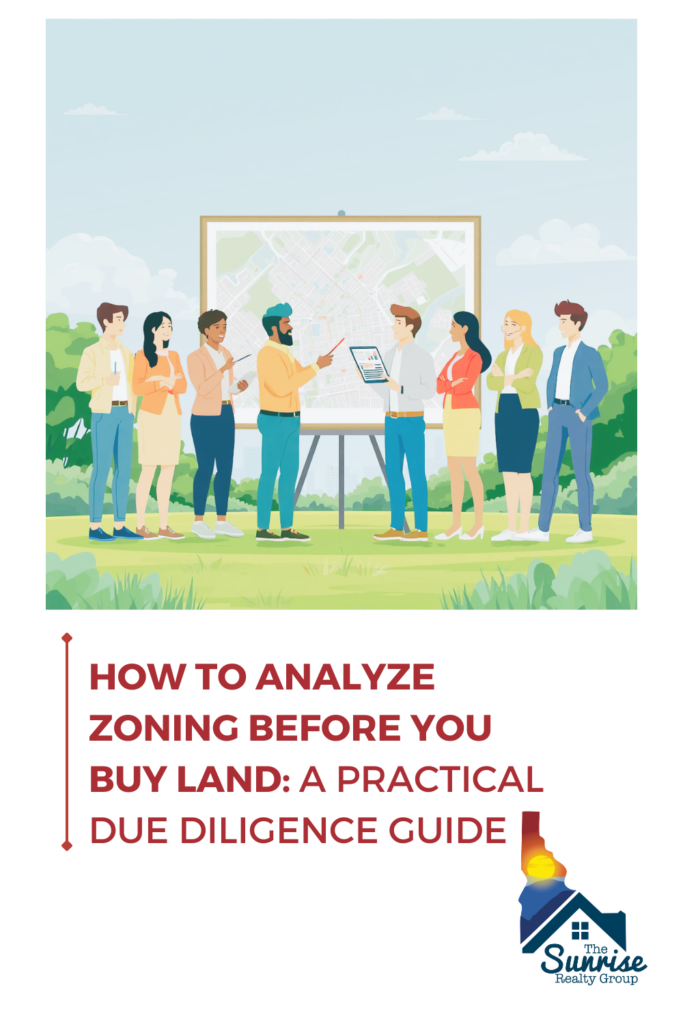
    Learn how to analyze zoning before you buy land in Idaho, including allowed uses, setbacks, easements, utilities, and approval risks.
  • Is It Really a Buildable Lot in Idaho? Platting, Access, and Legal Buildability

    Part 3 of the Series: How the Building Approval Process Actually Works in Idaho

    If you are trying to figure out whether you have a buildable lot in Idaho, zoning is only one part of the answer. A property can look legitimate in every casual sense. It may have a tax parcel number, appear on county maps, and even be bought and sold without much question. None of that automatically means the lot is legally buildable.

    That gap catches buyers off guard all the time. They assume the hard part is over because the zoning seems right and the land appears to exist as its own parcel. Then, somewhere between due diligence and permit review, they learn that the lot was never properly created, lacks legal access, or has easements and configuration problems that make development difficult or impossible. By then, the surprise is no longer theoretical. It is expensive.

    This part of the approval process matters because it answers a different question than zoning does. Zoning helps determine what may be allowed on a property. Platting, subdivision history, access, and legal configuration help determine whether the property can support building at all.

    Before someone invests in plans, engineering, or a purchase that assumes a straightforward project, they need to know whether the lot qualifies as a legal building site in the eyes of the local jurisdiction.

    A Parcel Can Exist Without Being Legally Buildable

    One of the biggest misunderstandings in land buying is the assumption that a parcel and a buildable lot are the same thing. They are not.

    A parcel number exists mainly for tax and ownership purposes. It tells the county that a piece of land is being tracked, assessed, and transferred. A buildable lot is something different. It is a lot that local government recognizes as having been lawfully created and configured in a way that can support development under current rules.

    That distinction matters more than many buyers realize. Land can be deeded, taxed, inherited, listed for sale, and shown on GIS maps, even if it falls short of legal buildability standards. A parcel may be real enough to own but still not qualify for a building permit without additional approvals, corrections, or legal cleanup.

    That is why buyers who stop their research at zoning often get into trouble. The zoning may look fine, but zoning alone does not confirm that the lot itself is valid for development.

    Who Reviews Lot Legality and Buildability?

    Before any property is treated like a true building lot, someone has to verify that it was created in a way the local jurisdiction still recognizes.

    That review usually starts with the planning department, but it can also involve engineering, public works, survey staff, and, in some cases, a hearing body or elected officials if a correction or approval is needed.

    What they are really looking at is whether the lot holds up as a legal building site today, not just whether it has been sitting on the books for years. That can mean digging into old plats, deeds, lot line adjustments, exemptions, access records, easements, and the current dimensional rules that apply to the property.

    This is where some buyers get surprised. A parcel can seem established because it has existed for a long time, shows up on maps, and has changed hands before. Still, none of that actually guarantees the lot will pass buildability review without issues.

    In fact, older rural parcels are often where the harder questions start.

    Why Platting Matters More Than Buyers Expect

    A lot’s subdivision history often determines whether it can move forward cleanly or become a slow, frustrating project.

    When a city or county looks at platting, it is trying to confirm that the lot came into existence through an approved process. That could mean a recorded subdivision plat, a short plat, a lawful lot line adjustment, or another recognized exemption.

    If the land was divided informally decades ago without completing the required process, the parcel may still exist for tax purposes while remaining legally questionable for development.

    That is more common than people think, especially in rural areas where land may have changed hands several times over the years. A buyer sees a separate tax parcel and assumes that means the lot has already cleared the legal hurdles. Sometimes it has. Sometimes it has not. And when it has not, the fix can take time, money, and patience.

    Platting review also confirms whether the lot meets basic physical standards. A parcel that is too narrow, oddly shaped, or undersized for the zoning district may not be an automatic dead end.

    Still, it may require a re-plat, a variance, or another formal process before construction can move ahead. That is the kind of issue that is easy to miss early and hard to ignore later.

    Access Problems Can Stop a Project Cold

    Access is one of the clearest examples of why a buildable lot in Idaho is about more than what you can see on the ground.

    A property may have a driveway. It may be reachable by dirt road. It may even have been used that way for years. None of that automatically proves legal access. Local jurisdictions usually want to see frontage on a public road or a properly recorded access easement that gives the lot recognized legal entry.

    That difference between physical access and legal access is where many buyers get burned. A person may be able to drive to the property without issue, yet still discover that the recorded access is missing, defective, or insufficient to support development. A lender, title company, or permit reviewer may see that problem very differently from a seller who simply says, “You can get there.”

    Landlocked or access-challenged parcels are not rare, especially outside city limits. Older splits, private roads, and long-standing informal arrangements can make a property feel usable until someone asks for documentation. 

    Once that happens, a casual assumption about access becomes a legal problem that has to be solved.

    Easements Can Shrink a Lot Fast

    Another reason buyers misjudge buildability is that they focus on the parcel boundary without paying enough attention to what crosses the site.

    Easements can quietly take a large bite out of a lot’s usable area. Utility easements, drainage easements, access easements, irrigation corridors, and canal-related restrictions may all affect where a structure can go. A lot can look wide open on a map and still have a building envelope that is much smaller than expected once the easements are understood.

    This is especially important on smaller or unusually shaped parcels, where the practical building area is already limited. A lot may still technically exist, but if say, the buildable area is pinched by drainage, setbacks, or access corridors, the project can become much more difficult than the buyer expected.

    In some cases, the lot remains legal but functionally awkward. In others, the constraints are serious enough that reconfiguration or additional approvals are required before the property can work.

    Why So Many Buyers Miss This Step

    Most buyers do not miss this step because the property appears to check all the boxes that usually make people feel safe. The listing looks legitimate. The parcel shows up on the map. There is a tax ID number. The zoning seems workable. On the surface, that feels like enough.

    One problem is that those signs can create a false sense of certainty. When land appears normal in public records, people tend to assume the deeper legal questions have already been settled. They assume someone else must have actually confirmed the lot was properly created, that access really is legally secure, and that the parcel can support development without a single issue.

    That is where expensive mistakes begin. A seller may assume a parcel is grandfathered because it has existed for years, or buyer may give a title report more weight than it deserves. A visible road can be mistaken for legal access. A separate parcel number can be mistaken for proof that the lot was lawfully created.

    By the time a planner, surveyor, or permit reviewer raises a problem, money has often already been spent and expectations are already in motion.

    Signs a Lot Deserves a Closer Look

    Some properties deserve extra caution from the start.

    Older parcels created before modern subdivision rules are often in need of closer review. Rural land outside city limits can raise more questions about legal creation and access. Private road access can be fine, but only if the documents behind it are solid. Missing plats, overlapping deeds, or easements cutting through the apparent building area are all signs that a buyer should slow down and look deeper.

    None of those conditions automatically make a property bad. They simply mean the lot should not be treated as routine. When the goal is to confirm a buildable lot in Idaho, unusual history and unusual site conditions deserve more attention, not less.

    What Happens When the Lot Falls Short

    If the jurisdiction finds that the lot is legally deficient, the next step depends on the nature of the problem.

    In some cases, the solution may be a lot line adjustment. In others, it could mean a new plat, a re-plat, creation of a formal access easement, relocation of an easement, or infrastructure work tied to development standards.

    What catches buyers off guard is how long these fixes can take. A problem that sounds minor in conversation may involve survey work, engineering review, public notice, agency coordination, or hearings. Even when a solution exists, it is rarely instant. Timelines stretch and costs begin to grow. Design options can even become narrow.

    That does not always mean the deal is dead. It means the property should be evaluated honestly before anyone treats it as a clean, ready-to-build site.

    The Bottom Line on Legal Buildability

    A parcel can look completely legitimate in all the ways that matter to a casual buyer and still fail the test of legal buildability.

    That is why this stage of the process matters so much. Zoning tells you part of the story, but it does not tell you whether the lot was lawfully created, whether it meets current standards, whether access is legally secure, or whether easements leave enough room to build.

    For buyers, builders, and landowners, that is the real takeaway. Before assuming a property is ready for the next step, make sure the actual lot itself holds up under review.

    If you are evaluating a buildable lot in Idaho, the safer move is to confirm legality, access, and configuration early, before the project reaches the point where bad assumptions become expensive ones.

    In the next part of the series, the focus moves to engineering, infrastructure, and utilities, where many projects run into the next round of problems even after zoning and lot legality appear to be resolved.

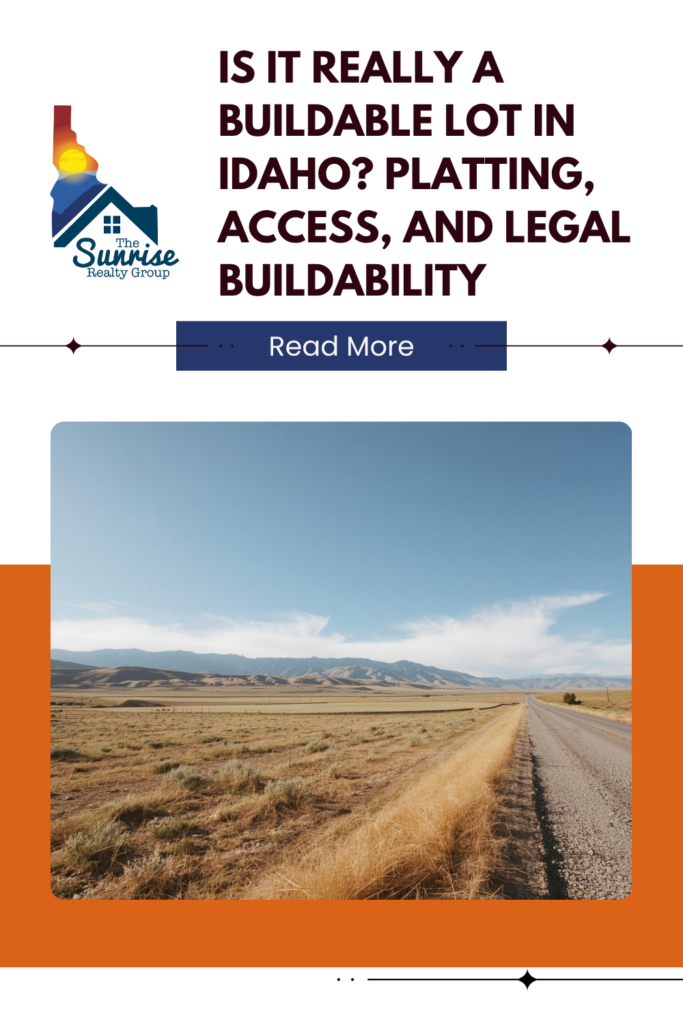
    Buildable lot Idaho: learn how platting, legal access, easements, and lot history affect whether land can actually be built on.

  • Mortgage vs. Deed of Trust in Idaho

    Mortgage vs. Deed of Trust in Idaho

    Understanding the 40-Acre and 80-Acre Rules That Most Buyers Miss

    Mortgage vs. Deed of Trust is one of the most misunderstood legal distinctions in Idaho real estate, especially for buyers purchasing rural land, acreage, or a new home outside city limits.

    If you’ve ever purchased property in Idaho, you’ve probably heard the terms mortgage and deed of trust used interchangeably. Day-to-day, that’s usually fine—but legally, they are not the same.

    In Idaho, acreage size and land use can directly determine which security instrument is legally allowed for your home loan.

    This distinction becomes critically important for:

    • Rural land purchases
    • Agricultural properties
    • Large acreage parcels
    • Custom home builds outside city limits

    Understanding the differences between a mortgage vs. deed of trust early can save you from a variety of headaches; loan restructuring, frustrating escrow delays, and those last-minute “uh-oh” surprises that impact interest rates, loan terms, and foreclosure rights.

    In this article, we’ll cover the key differences, explain Idaho’s acreage rules, and outline what buyers, builders, and landowners should keep in mind.

    The Core Difference: Mortgage vs. Deed of Trust

    Both instruments are legally binding documents that tie borrowed money to real property as collateral, creating a security interest that protects the mortgage lender (and supports repayment of a mortgage loan or construction loan).

    Mortgages and deeds of trust serve as a security interest for a mortgage lender, ensuring repayment of a mortgage loan or construction loan.

    The main differences come down to:

    • Who holds the property’s legal title as security
    • How foreclosure proceedings work
    • Whether court involvement is required

    At a Glance

    FeatureMortgageDeed of Trust
    Parties involved23
    Security holderLenderNeutral third party
    Foreclosure typeJudicial foreclosure processNon-judicial foreclosure
    Court involvementRequiredNot required
    Speed of foreclosureSlowerFaster
    Common inEastern U.S., District of ColumbiaWestern U.S. (including Idaho)

    What Is a Mortgage?

    Mortgages as we know them are defined as a legal agreement between two parties:

    • Borrower – the person receiving the home loan
    • Mortgage lender – a bank or financial institution

    The borrower of course retains ownership of the property, while the lender holds a legal claim (lien) recorded in public records. The mortgage note and promissory note outline monthly payments, interest rate, and loan terms.

    If the Borrower Defaults

    When borrower defaults occur under a mortgage agreement:

    • The lender must file a lawsuit
    • The foreclosure proceedings move through the court system
    • A judge issues a court order authorizing the sale of the property

    This judicial process offers more borrower protections but significantly increases time, cost, and complexity for lenders.

    What Is a Deed of Trust?

    A deed of trust (sometimes called a trust deed or deed of trust agreement) is a three-party legal instrument:

    • Trustor – the borrower
    • Beneficiary – the lender
    • Trustee – a neutral third party (often a title company, escrow company, or private trust company)

    Under this arrangement, the third-party trustee temporarily holds title to the property on the behalf of the lender as security.

    If the Borrower Defaults

    If borrower defaults occur under a deed of trust:

    • The trustee may act on behalf of the lender
    • Foreclosure can proceed via non-judicial foreclosure
    • The trustee exercises the power of sale
    • The property may be sold at public auction without court proceedings

    This ease of foreclosure is why lenders prefer deeds of trust when state laws allow their use.

    Why Mortgage vs. Deed of Trust Matters in Idaho

    In Idaho, “Mortgage vs. Deed of Trust” is not just a technical distinction — it’s a legal limitation governed by the Idaho Trust Deed Act.

    That’s because once a property exceeds certain acreage thresholds (or is classified as agricultural land), a deed of trust is no longer legally valid, regardless of the lender’s preference. 

    At this point, a mortgage must instead secure the loan.

    This affects:

    • Real estate transactions involving land
    • Construction loans and hard money lender deals
    • Seller financing structures
    • Foreclosure procedures and borrower legal rights

    Idaho’s 40-Acre and 80-Acre Rules Explained (Mortgage vs. Deed of Trust)

    ✅ Property Inside an Incorporated City or Village

    A deed of trust may be used regardless of acreage.

    ✅ Property 40 Acres or Less (Any Use)

    • Agricultural or non-agricultural
    • Rural or urban

    ➡ Deed of trust allowed

    ✅ Non-Agricultural Property Over 40 Acres but Not Exceeding 80 Acres

    • Not principally used for agricultural production

    ➡ Deed of trust allowed

    ❌ When a Deed of Trust Is NOT Allowed

    Agricultural Land Over 40 Acres

    If the piece of property:

    • Exceeds 40 acres and
    • Is primarily agricultural

    ➡ Mortgage required

    Any Property Over 80 Acres

    • Agricultural or non-agricultural

    ➡ Mortgage required

    ➡ Judicial foreclosure required if default occurs

    Common & Practical Examples (Idaho-Specific)

    • 20-acre hobby farm → Deed of trust
    • 60-acre rural homesite (non-ag) → Deed of trust
    • 60-acre working farm → Mortgage
    • 120-acre ranch → Mortgage
    • 10-acre parcel near city limits → Deed of trust

    How This Impacts Buyers, Builders, and New Home Construction

    For buyers building a new home on acreage, the type of security instrument can affect:

    • Loan approval timelines
    • Interest rate and borrower money requirements
    • Availability of construction loans
    • Whether a real estate attorney or a law firm must be involved
    • Foreclosure type and deficiency judgment exposure

    Most buyers don’t discover these limits until escrow is already underway — which can trigger loan restructuring or contract amendments.

    Common Elements Buyers Should Review Carefully

    Regardless of whether a mortgage or deed of trust is used, buyers should understand these important documents:

    • Mortgage note or promissory note
    • Legal description of the property
    • Property’s legal title and equitable title
    • Trustee company or title company role
    • Foreclosure sale procedures
    • Terms of the mortgage or trust deed

    This blog post article is for informational purposes only and does not constitute legal advice. Buyers should consult their lender or a qualified real estate attorney for transaction-specific guidance.

    Bottom Line: Mortgage vs. Deed of Trust in Idaho

    • ≤ 40 acres → Deed of trust allowed
    • 41–80 acres (non-ag) → Deed of trust allowed
    • 41–80 acres (ag) → Mortgage required
    • Over 80 acres (any use) → Mortgage required

    Understanding “Mortgage vs. Deed of Trust“ early protects your timeline, financing strategy, and long-term legal rights.

    Build with clarity—before you commit.

    If you’re buying land, building on acreage, or navigating Idaho’s mortgage vs. deed-of-trust rules, remember: Sunrise Realty Group can bring clarity to your options before they become problems.

    We guide buyers throughland selection, financing considerations, and builder coordination so you can move forward with confidence—not surprises.


    👉 Talk with Sunrise Realty Group about your next step

    Mortgage vs deed of trust in Idaho explained. Learn how the 40-acre and 80-acre rules affect rural land, farms, and large acreage.