Category: Home Design

  • Top Idaho Home Styles of 2026: Modern Farmhouse or Mountain Contemporary?

    Top Idaho Home Styles of 2026: Modern Farmhouse or Mountain Contemporary?

    The top Idaho home styles of 2026 are not just about what looks good online. They are about how people actually want to live in Idaho: close to nature, connected to community, and comfortable through every season.

    Across Boise, the Treasure Valley, and surrounding Idaho communities, buyers are paying closer attention to the way a home fits the land, the climate, and daily life. Style still matters, of course. Curb appeal matters. So does resale value. But the strongest home designs in 2026 are not just pretty. They are practical, flexible, energy-aware, and rooted in place.

    Two styles continue to lead the conversation in Idaho new construction and custom home design:

    Modern farmhouse

    Mountain contemporary

    Both styles make sense here. Both can work beautifully in the Treasure Valley. Both can support outdoor living, natural materials, open gathering spaces, and strong curb appeal.

    But they are not the same.

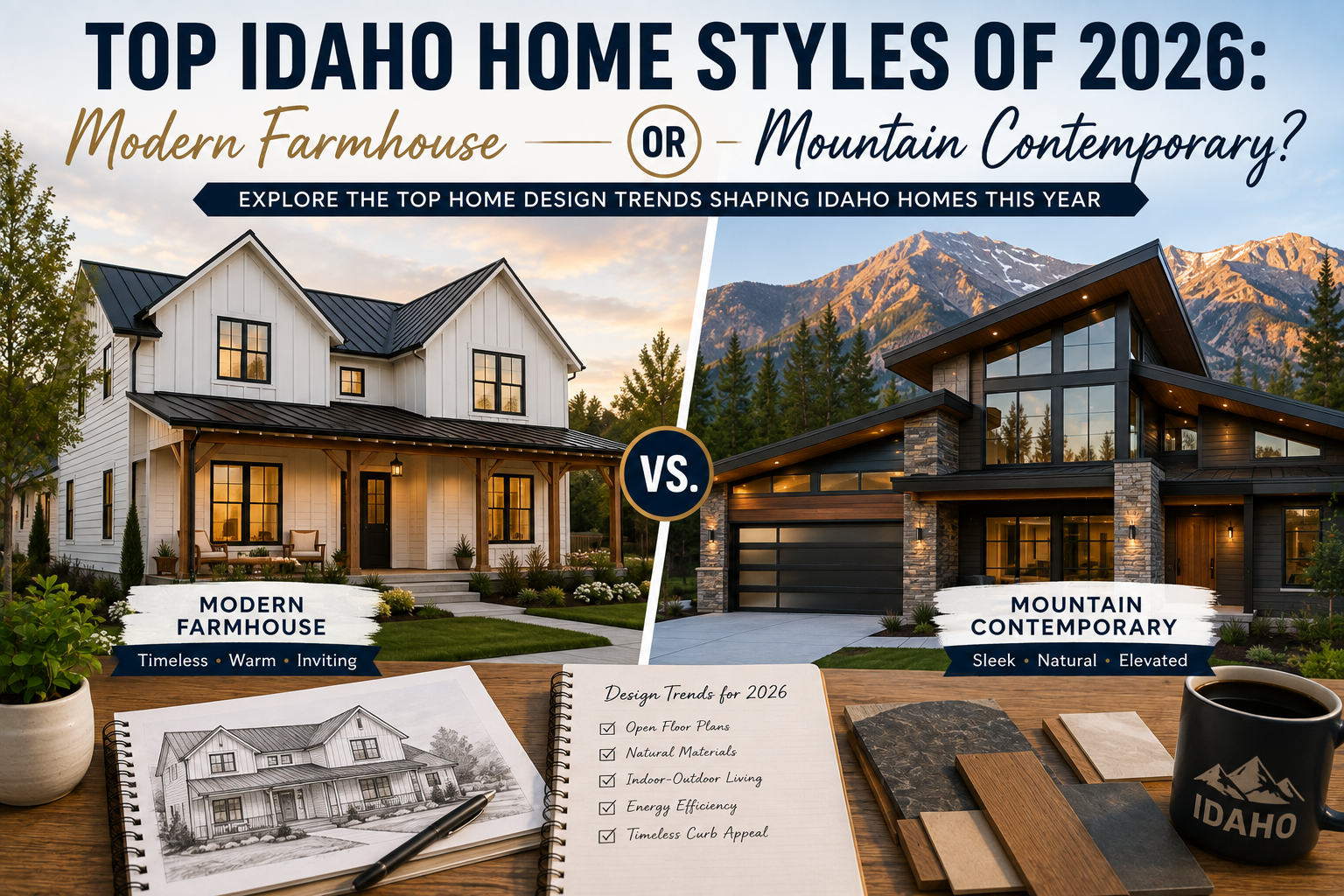
    Modern farmhouse leans warm, classic, and family-friendly. Mountain contemporary feels cleaner, bolder, and more connected to views and natural surroundings. Choosing between them is not just a design decision. It is also a lifestyle decision.

    Let’s look at what defines each style, where they work best, and how to decide which one fits your Idaho home plans.

    Why Idaho Home Style Matters in 2026

    Idaho has a recognizable design personality. It is shaped by farmland, foothills, mountains, rivers, four-season weather, and communities that still value space, privacy, and connection to the outdoors.

    That is why home style matters here.

    A home in Boise’s North End may call for a different design approach than a new build in Star, a foothill home in Eagle, or a custom property near open acreage in Kuna or Middleton. The best style is not always the trendiest one. It is the one that fits the setting, budget, buyer’s lifestyle, and long-term plan for the property.

    In 2026, buyers are also thinking more carefully about function. They want homes that support remote work, flexible rooms, outdoor living, better energy performance, natural light, storage, and spaces that can change as life changes.

    That is one reason modern farmhouse and mountain contemporary continue to hold attention. Both styles can be adapted for modern living while still feeling connected to Idaho.

    The Rise of Modern Farmhouse in Idaho

    Modern farmhouse remains one of the most recognizable home styles in Idaho, especially in suburban, semi-rural, and new construction communities.

    The style works because it blends familiar rural charm with modern comfort. It feels casual without feeling unfinished. It feels classic without feeling old-fashioned. For many buyers, it offers the emotional pull of a farmhouse with the convenience of a new build.

    In the Treasure Valley, modern farmhouse homes often feel right at home near farmland, open lots, new subdivisions, and family-focused neighborhoods.

    What Defines a Modern Farmhouse?

    Modern farmhouse design usually includes a mix of traditional exterior details and updated interior layouts.

    Common features include:

    • White or light neutral exterior colors
    • Board-and-batten or lap siding
    • Black-framed windows
    • Gabled roofs
    • Covered front porches
    • Warm wood accents
    • Stone fireplace details
    • Large kitchen islands
    • Open floor plans
    • Walk-in pantries
    • High ceilings
    • Indoor-outdoor living spaces

    Inside, modern farmhouse design is usually about comfort and connection. The kitchen often becomes the center of the home. The living room flows into the dining area. Storage matters. Mudrooms matter. Pantries matter. The layout is designed for real daily life, not just a nice photo.

    That is why the style continues to appeal to families, relocating buyers, and first-time builders who want something warm, useful, and easy to personalize.

    Why Idaho Buyers Still Like Modern Farmhouse

    Modern farmhouse has been popular for years, so the 2026 version needs to be handled carefully. The best versions do not feel like a copy-and-paste trend. They feel more grounded, more personal, and more connected to the setting.

    Here is why the style still works in Idaho.

    1. It Reflects Idaho’s Rural Roots

    Even as Boise, Meridian, Star, Kuna, Nampa, and Eagle continue to grow, Idaho’s agricultural identity is still part of the landscape.

    Modern farmhouse design nods to that history without requiring buyers to live in an actual old farmhouse. It gives people the charm of simple rooflines, porches, natural textures, and family-centered layouts while still offering the comfort of new construction.

    2. It Works Across Different Budgets and Sizes

    One reason modern farmhouse remains popular is that it is flexible.

    It can work as a smaller new build, a semi-custom home, or a larger custom property. The exterior can stay simple and budget-conscious, or be elevated with upgraded materials, windows, lighting, and architectural details.

    That flexibility makes it appealing for buyers who want style without necessarily jumping into the most expensive design category.

    3. It Supports Family and Community Living

    Modern farmhouse interiors usually prioritize gathering spaces.

    Open kitchens, large islands, covered patios, and comfortable living areas make the style practical for families, hosting, holidays, and everyday routines. It is a style that naturally supports connection.

    For buyers looking in newer Treasure Valley communities, that matters. Many are not just buying a house. They are looking for a neighborhood, a rhythm, and a place to settle.

    4. It Has Strong Curb Appeal

    Modern farmhouse homes tend to photograph well and show well.

    Clean siding, black window accents, porches, and warm details create a look that feels polished but approachable. For resale, that can help. A home that feels current without feeling too extreme may appeal to a broad range of future buyers.

    The key is balance. Too many trendy farmhouse details can quickly date a home. A more timeless version, with better materials and fewer gimmicks, is more likely to hold up.

    Where Modern Farmhouse Works Best in Idaho

    Modern farmhouse homes are especially common in:

    These areas often combine newer construction, open space, family-friendly layouts, and easy access to Treasure Valley amenities. That makes them a natural fit for farmhouse-inspired design.

    Mountain Contemporary: A Signature Idaho Style

    If modern farmhouse is warm and familiar, mountain contemporary is clean, dramatic, and deeply connected to the landscape.

    Mountain contemporary homes are especially popular for foothill properties, view lots, luxury homes, custom builds, and sites where the land itself is part of the experience.

    This style is not trying to look rural in the traditional farmhouse sense. It is trying to feel grounded in the natural environment while using modern lines, large windows, and elevated materials.

    What Defines Mountain Contemporary Homes?

    Mountain contemporary architecture blends modern design with natural materials.

    Common features include:

    • Stone, timber, glass, and metal
    • Large windows
    • Expansive views
    • Flat or low-pitched roofs
    • Clean lines
    • High ceilings
    • Open living spaces
    • Dark exterior contrasts
    • Neutral, earthy color palettes
    • Covered outdoor living areas
    • Minimalist interior details
    • Energy-efficient systems and materials

    This style often works best when the home has something to connect to: foothill views, mature trees, open land, water, trails, or a dramatic natural setting.

    The design is usually less decorative than modern farmhouse. The beauty comes from the shape of the home, the materials, the views, and the way indoor and outdoor spaces work together.

    Why Mountain Contemporary Is Growing in Idaho

    Mountain contemporary design aligns with how many Idaho buyers want to live in 2026.

    People want homes that feel calm, open, and connected to nature. They want natural light. They want outdoor living. They want spaces that feel modern but not cold. Mountain contemporary checks a lot of those boxes.

    1. It Connects the Home to the Landscape

    In foothill areas, river corridors, wooded lots, and view properties, mountain contemporary homes can feel like they belong to the setting.

    Stone, wood, glass, and earth-toned materials help the home feel grounded. Large windows and outdoor spaces bring the landscape into the home’s daily experience.

    That connection to place is one of the biggest reasons this style feels so Idaho.

    2. It Maximizes Natural Light and Views

    Mountain contemporary homes often use large windows, open layouts, and glass doors to frame the outdoors.

    That matters in a place like Idaho, where buyers may be drawn to foothill views, sunsets, mountain backdrops, mature trees, rivers, or open sky. A home with the right orientation and window placement can turn the setting into part of the design.

    This is especially important for custom homes and luxury builds, where the lot is often chosen for its view or natural surroundings.

    3. It Appeals to Luxury and Relocating Buyers

    Many relocating buyers are drawn to Idaho for its space, scenery, and a different pace of life.

    Mountain contemporary homes can offer that fresh start while still feeling upscale and modern. The style often appeals to buyers coming from markets where contemporary architecture, indoor-outdoor flow, and high-end finishes are already familiar.

    In the Treasure Valley, this can make mountain contemporary a strong fit for buyers looking in Eagle, East Boise, foothill neighborhoods, and custom home communities.

    4. It Supports Low-Maintenance, High-Performance Living

    Mountain contemporary homes often use durable materials, efficient systems, and simpler exterior forms.

    That can support lower-maintenance living when the home is designed well. Metal roofing, high-performance windows, efficient insulation, smart systems, and quality exterior materials can all play a role.

    The goal is not just to build something beautiful. It is to build something that performs well through Idaho’s hot summers, cold winters, wind, sun, and seasonal changes.

    Where Mountain Contemporary Works Best in Idaho

    Mountain contemporary homes are often a strong fit for:

    • Eagle foothills
    • East Boise
    • Harris Ranch
    • Barber Valley
    • View lots
    • Luxury communities
    • Custom builds in Star or Middleton
    • Properties near outdoor recreation
    • Mountain towns like McCall, Donnelly, and Cascade

    This style is especially powerful when the lot has a view, a slope, a mature landscape, or a natural feature worth highlighting.

    Modern Farmhouse vs. Mountain Contemporary

    Choosing between modern farmhouse and mountain contemporary is not just about which one looks better on Pinterest.

    It is about the lifestyle you want, the setting you are building in, and the kind of home that will still feel right years from now.

    Modern farmhouse may be a better fit if you want:

    • A warmer, more classic look
    • A family-friendly layout
    • A home that fits suburban or semi-rural neighborhoods
    • Covered porches and gathering spaces
    • A style that feels approachable and timeless
    • A design that can work across a wider range of budgets

    Mountain contemporary may be a better fit if you want:

    • A bolder, more modern exterior
    • Large windows and dramatic views
    • Natural materials like stone, timber, and metal
    • A custom or luxury feel
    • Strong indoor-outdoor connection
    • A home that responds closely to the land

    Both can be beautiful. Both can be smart choices. The better choice depends on the property, the budget, and the way the buyer wants to live.

    Other Idaho Home Styles Gaining Attention in 2026

    Modern farmhouse and mountain contemporary may lead the conversation, but they are not the only styles Idaho buyers are considering.

    Other styles gaining attention include:

    • Craftsman homes with deep porches, wood details, and established-neighborhood charm
    • Ranch-style homes with single-level living and practical layouts
    • Urban modern homes with clean lines near downtown Boise and infill areas
    • Scandinavian-inspired homes with simplicity, natural light, and warm minimalism
    • Traditional homes in historic or established neighborhoods
    • Rustic timber homes in mountain and recreation communities
    • Modern farmhouse hybrids that mix classic warmth with cleaner contemporary lines

    Each style has its place. A Craftsman may feel perfect near Boise’s older neighborhoods. A ranch-style home may be ideal for buyers who want single-level living. A modern home may fit better on an infill lot or in a more design-forward community.

    The point is not to chase every trend. The point is to choose a style that fits the land, the neighborhood, and the buyer’s actual life.

    Why These Are the Top Idaho Home Styles of 2026

    The strongest Idaho home styles in 2026 share a few key features.

    That is why modern farmhouse and mountain contemporary continue to stand out. They are different styles, but both can reflect what buyers love about Idaho: space, landscape, comfort, and a better quality of life.

    Final Thoughts: Designing a Home That Feels Like Idaho

    Idaho home design is not about copying a trend. It is about building a home that fits the setting, supports your lifestyle, and feels connected to the place you chose.

    For some buyers, that means a modern farmhouse with a big kitchen, covered porch, and room for everyone to gather. For others, it means a mountain contemporary home with glass, stone, timber, and views that make the landscape part of the design.

    Either way, the best home style is the one that still feels right after the trend cycle moves on.

    Planning a new home build in Idaho? Sunrise Realty Group can help you think through the location, design direction, builder fit, and lifestyle goals before you get too far into the process.

    Your home should reflect your lifestyle, your surroundings, and your vision of what home means. Idaho gives you the canvas. The right plan helps bring it to life.
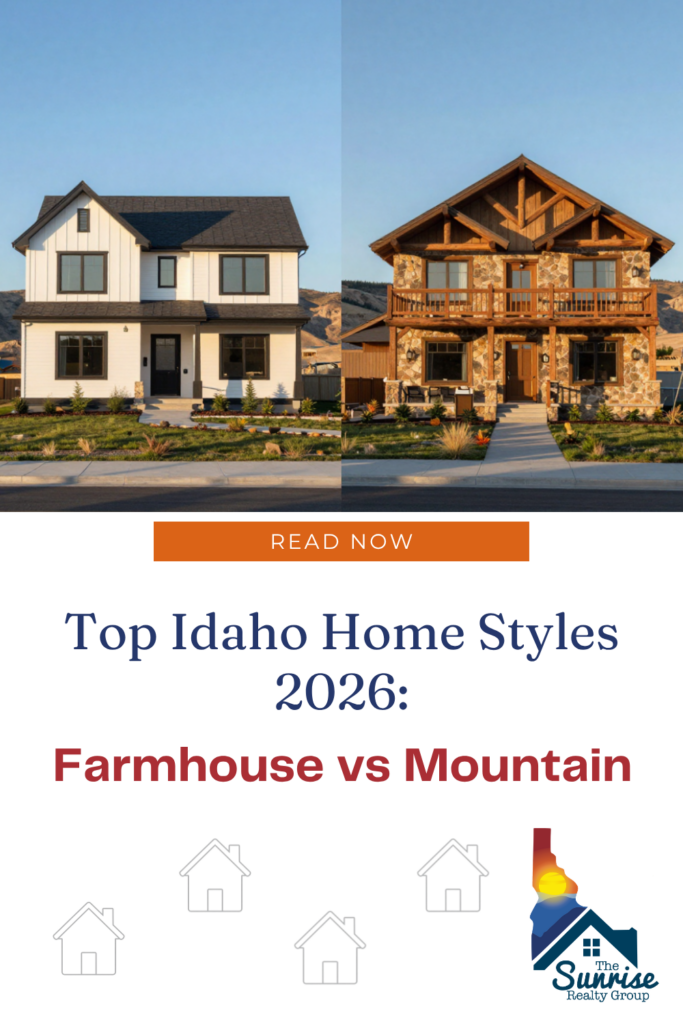
    Explore the top Idaho home styles of 2026, including modern farmhouse and mountain contemporary homes, with design ideas for Boise, the Treasure Valley, custom homes, and new construction in Idaho.
  • Living the Idaho Dream: 7 Reasons to Build Instead of Buy in the Treasure Valley

    Why build instead of buy? For many, the Idaho dream means building a home in the Treasure Valley that truly reflects their lifestyle.

    Where Boise’s foothills meet farmland and fast-growing communities, more buyers are opting to build rather than compete for resale homes. Building offers more control over layout, finishes, energy efficiency, and functionality.

    Resale homes can still be a great fit, but they often come with tradeoffs. The layout may not match how your family lives now. The systems may be a little older. The updates may be half-finished, or the right homes may not be available in the locations you actually want.

    For buyers relocating to the Treasure Valley, moving toward Star or Kuna, upgrading from a first home, or planning their forever home, building can offer a cleaner path. You are not just picking from what happens to be listed. You are starting with the home, lot, layout, and lifestyle you want to build around.

    Here are seven reasons buyers choose to build instead of buy in the Treasure Valley.

    7 Reasons to Build Instead of Buy in the Treasure Valley

    1. You Get the Home You Actually Want

    Buyers who build can start with what they truly want, rather than settling for an imperfect fit.

    Resale homes force compromises. The kitchen may be dated, the garage too small, the layout wrong, or the finishes and storage inadequate for daily life.

    Building starts with your lifestyle and home plans.

    Do you want a modern farmhouse with vaulted ceilings? An oversized garage or RV bay? What about a larger kitchen island? Open-concept floor plans? A semi-custom home with upgraded finishes? A multi-generational suite? A dedicated office?

    New construction gives buyers more time to make those decisions before the home is built, rather than paying later to remodel someone else’s old floor plan.

    Custom and semi-custom builders in the Treasure Valley offer a variety of design options, helping buyers find a home that feels intentional from the start.

    Instead of adapting to a house, shape it around your life.

    2. New Builds Are Often More Energy Efficient

    Idaho experiences all four seasons, and older homes are not always built for how modern families use energy today. Even well-loved homes can come with older windows, aging HVAC systems, insufficient insulation, outdated appliances, or drafty doors.

    New homes in Idaho meet modern code requirements and industry standards, reducing monthly utility costs and maintenance expenses.

    Today’s new homes may include:

    • High-performance windows
    • Better insulation
    • Tighter building envelopes
    • Efficient appliances
    • Smart thermostats
    • Improved ventilation systems
    • More efficient heating and cooling equipment

    Energy-efficient homes can lower the cost of ownership over time by reducing utility bills and maintenance needs. They can also make the home more comfortable during hot summers, cold winters, and the shoulder seasons when Idaho weather changes its mind every few hours.

    Consider energy performance alongside the sale price—ongoing costs matter after move-in.

    3. You Can Avoid Bidding Wars and Resale Pressure

    In Boise, Meridian, Eagle, Kuna, Star, Nampa, and Middleton, resale homes can sell immediately. Buyers feel rushed to tour, offer, and decide.

    This pressure can be especially stressful for first-time buyers or those relocating.

    But if you want to build before you buy? Well, when you build a home, the process looks different.

    You are not rushing from one showing to the next. You are not competing against multiple offers on the same weekend. You are not guessing what repairs may show up after inspection. You are not trying to win a house that was never quite right in the first place.

    You compare options like buying land, designs, builders, timelines, and pricing with greater clarity.

    Building still requires planning, patience, and guidance, but for many, it feels more strategic than competing for limited resale inventory.

    4. New Construction Means Fewer Repairs and Surprises

    Older Treasure Valley homes hide costs—roof problems, bad HVAC, outdated plumbing, old insulation, poor windows, worn floors, and foundation issues often go unseen.

    A new home gives you a fresh start.

    With a new home build, major systems and materials are new from the beginning. That may include:

    • New roof
    • New HVAC system
    • New water heater
    • New framing and exterior materials
    • New finishes and fixtures
    • New appliances
    • Updated electrical and plumbing systems

    Many builders also offer warranties that cover workmanship, systems, or structural components for a set period. Warranty terms vary by builder, so buyers should always review the details carefully, but the added protection can be a major benefit.

    Buyers wanting to avoid immediate, expensive repairs may find peace of mind with new construction.

    5. You Get Access to New Home Communities

    Treasure Valley’s fastest-growing communities offer new neighborhoods with parks, schools, trails, shopping, open space, and strong community connections. Meridian, Kuna, Star, Eagle, Middleton, and Nampa attract these buyers.

    New home communities may include:

    • Walking paths
    • Green space
    • Playgrounds
    • Community pools
    • Planned commercial areas
    • Well-designed neighborhood layouts
    • Access to nearby schools and amenities

    When you build, you may have more control over lot features like orientation, views, yard size, and proximity to amenities.

    Existing homes can offer established neighborhoods and mature landscaping, which many buyers love. But new communities are often designed around how people live now, with greater attention to open layouts, flexible spaces, neighborhood amenities, and connections to surrounding growth.

    For many buyers, that combination is hard to ignore.

    6. Building Lets You Plan for the Future

    Homes now do more than ever.

    Remote work, home gyms, flex rooms, big garages, outdoor living, and tech needs redefine what buyers expect from a home. Old floor plans may not fit current needs.

    Building lets buyers proactively plan for needs from the start, not as an afterthought.

    That might include:

    • A dedicated home office
    • Fiber internet wiring
    • An oversized garage or RV bay
    • A large covered patio
    • High ceilings
    • Smart home features
    • A multi-generational layout
    • Energy-efficient upgrades
    • More storage
    • Flexible rooms that can change over time

    Updating an older home can be expensive—walls, wiring, garage space, positioning, and storage may all need improvement.

    A new build allows you to plan those features before construction starts.

    Building allows for both current and future lifestyle needs—not just today’s demands.

    7. Building Can Support Long-Term Value

    New construction can be a strong long-term choice in Idaho when well-designed, well-placed, and built with quality.

    The Treasure Valley attracts buyers for lifestyle, recreation, business growth, and community. Modern homes stay attractive to future buyers as demand continues.

    New construction may support long-term value through:

    • Updated layouts
    • Newer materials
    • Lower maintenance needs
    • Better energy performance
    • Modern finishes
    • Stronger resale flexibility
    • Better alignment with current buyer preferences

    A well-planned new home offers strong value by aligning with lifestyle and real estate trends.

    That is why guidance matters. The right plan can help buyers avoid overbuilding, underplanning, or choosing a property that does not align with their goals.

    Building in the Treasure Valley: What to Expect

    Sunrise Realty Group’s design-first building approach, paired with MC Design House, helps guide clients through the home-building process with more clarity from the start.

    Step 1: Secure Land

    Bring your own land or let the team find the right lot in the Treasure Valley. Choose one that fits your budget, lifestyle, design, and building needs.

    Step 2: Create Your Custom Home Design

    After finding the land or direction, start the design. Compare home plans, layouts, finishes, priorities, and budget.

    Step 3: Connect With a Vetted Builder

    Sunrise Realty Group connects you with vetted builders who match your project, timeline, and customization needs.

    Step 4: Build, Customize, and Move In

    From there, buyers can watch the home come together step by step. Throughout the construction process, the goal is to keep communication clear, expectations aligned, and decisions connected from land to design to finished home.

    Final Thoughts: Building Is the Idaho Dream for Many Buyers

    Living in Idaho offers a little slice of Heaven: big skies, strong communities, outdoor recreation, and room to create something personal. For many families, building is the clearest path to a home that fits their life now and in the years ahead.

    Building can offer:

    • Personalization
    • Energy efficiency
    • Long-term savings
    • Fewer repairs
    • Modern layouts
    • Better planning for future needs
    • Strong resale appeal

    Whether you are creating your forever home, upgrading from your first home, relocating to the Treasure Valley, or designing for future generations, building can be a smart way to make the Idaho dream feel real.

    If you are ready to explore building and want support at every step, Sunrise Realty Group can help guide you from land and design to builder coordination and keys.

    Explore why more Idaho buyers choose to build instead of buy in the Treasure Valley, the benefits of new construction, and long-term value.

  • Introducing the Builder Plan Licensing Program by The Sunrise Realty Group

    Introducing the Builder Plan Licensing Program by The Sunrise Realty Group

    A New Approach to Residential Plan Access for Builders

    At The Sunrise Realty Group, we are always looking for ways to better support builders, developers, and real estate professionals throughout the Treasure Valley.

    Recently, MC Design House joined The Sunrise Realty Group, allowing our companies to work together more closely and provide a broader range of services for the residential construction industry. By bringing residential design and real estate services together under one umbrella, we are able to offer builders a more streamlined experience when planning and developing new homes.

    Today we are excited to introduce a new program designed specifically for builders who regularly construct repeatable homes.

    The Builder Plan Licensing Program

    The Builder Plan Licensing Program is a new approach to how builders access residential construction plans.

    For more than 30 years, MC Design House has been designing homes throughout the Treasure Valley. During that time we have worked with a wide range of builders and have gained valuable insight into how plans are actually used in the construction process.

    What we have learned is that many builders often rely on a set of proven home designs that can be built repeatedly with little or no modification. However, the traditional process requires purchasing a new plan each time a project begins.

    The Builder Plan Licensing Program changes that.

    Instead of purchasing plans individually for every project, builders enrolled in the program gain access to a curated selection of residential designs that can be deployed across multiple projects through a simple licensing structure.

    Our goal is to make the process faster, more predictable, and more cost-effective for builders who construct multiple homes each year.


    How the Program Works

    Beginning May 1st, builders who enroll in the Builder Plan Licensing Program will gain access to a curated selection of residential home plans.

    Builders can deploy these plans across their projects during the term of the program using plan licenses.

    Each builder will be able to deploy up to 12 plan licenses during the six-month program term.

    Each license allows the builder to construct one home using a plan from the Builder Plan Library.

    Builders have flexibility in how those licenses are used. Licenses can be used for upcoming projects as needed, deployed multiple times in a single month or spread out across the full six-month term

    At the end of the six-month period, builders may renew their participation in the program for another term.

    This structure allows builders to maintain flexibility while keeping design costs predictable.


    Program Tiers

    The Builder Plan Licensing Program is offered in four tiers, based on the size of the homes being constructed.

    Each tier provides access to plans within a specific square-footage range.


    Tier 1

    Plans up to 2,000 square feet

    $3,000 per month
    6-month term

    Total available licenses: 12 homes


    Tier 2

    Plans up to 3,000 square feet

    $4,500 per month
    6-month term

    Total available licenses: 12 homes


    Tier 3

    Plans up to 4,000 square feet

    $6,000 per month
    6-month term

    Total available licenses: 12 homes


    Tier 4

    Plans larger than 4,000 square feet

    Pricing for Tier 4 plans will be determined based on the specific needs of the builder and the types of homes being constructed.


    Additional Licensing Option

    Builders who anticipate a higher volume of projects can expand their plan usage within the program.

    For an additional $1,000 per month, builders can increase their allowance to 18 total plan licenses during the six-month term.

    This option allows builders who are producing a higher number of homes to maintain the same streamlined licensing structure while increasing their deployment capacity.


    Program Launch

    Enrollment for the Builder Plan Licensing Program begins May 1st.

    Builders interested in participating in the program are encouraged to reach out to learn more about how the program works and determine which tier best fits their construction needs.

    We are always looking for ways to provide additional value to our builder partners, and we believe this program offers a unique opportunity to streamline the plan process while reducing overall design costs.

    If you would like to learn more or reserve a spot in the program, please feel free to contact us.

    We look forward to continuing to support the builders who are shaping the future of housing in the Treasure Valley.

  • Energy-Efficient Design Tips for Idaho’s Climate

    Energy-Efficient Design Tips for Idaho’s Climate

    Designing a home that performs well in Idaho’s climate requires more than innovative materials—it requires strategy. Here are a few of our favorite energy-efficient design tips for Idaho’s climate.

    Because Idaho experiences hot summers, cold winters, low humidity, and dramatic temperature swings, the right energy-efficient design choices can make an enormous difference in comfort, durability, and long-term energy costs.

    Keep reading to learn more.

    Best Energy-Efficient Design Tips for Idaho’s Climate.

    Whether you’re planning a custom home, refining a semi-custom plan, or starting new construction on your land, these energy-efficient design tips for Idaho will help reduce energy consumption, and lower your utility bills, while creating a healthier, more resilient home.

    ⭐ 1. Orient the Home to Maximize Sunlight & Heat Control

    Home orientation is one of the most important elements of energy-efficient design in Idaho.

    Proper placement reduces summer heat gain, prevents winter heat loss, and supports passive homes and sustainable buildings.

    A few of the best practices include:

    • Positioning the main living areas on the south side for natural lighting and passive heat
    • Reducing large east/west windows to limit unwanted heat transfer
    • Using roof overhangs to block high summer sun but welcome winter sun
    • Designing rooflines that allow for future solar panels or solar power systems

    Good orientation is a cost-effective solution that reduces energy usage from day one.

    ⭐ 2. Choose High-Performance Windows for Extreme Temperature Swings

    Idaho’s winters can drop below zero while summers push toward triple digits—meaning windows play a major role in heat loss, heat gain, and overall energy waste.

    You’ll want to look for windows that provide:

    • Double or triple panes
    • Low-E coatings to reduce heat transfer
    • Argon or krypton gas insulation
    • Fiberglass or vinyl frames
    • High SHGC on south-facing windows
    • Low SHGC on west-facing windows

    Better windows improve indoor air quality, reduce energy consumption, and contribute to potential energy savings in both the short and long run.

    ⭐ 3. Upgrade Insulation—Especially in Attics, Walls & Crawl Spaces

    Insulation remains one of the best ways to improve your home’s energy efficiency. Idaho building codes set minimums, but optimal performance usually requires more—especially in new homes built for long-term performance.

    Recommended levels:

    • R-49 to R-60 in the attic
    • R-21 or higher in exterior walls
    • Insulated basement or conditioned crawl space foundations
    • Robust air sealing around penetrations to reduce air leakage

    Stronger insulation minimizes heat loss, lowers operating costs, and keeps your home comfortable year-round.

    ⭐ 4. Select an HVAC System Designed for Idaho’s Climate

    HVAC is a critical part of both energy conservation and building performance.

    Because Idaho has diverse elevations and microclimates, you should tailor your system to your location and heating needs.

    Efficient options include:

    • High-efficiency gas furnaces (95%+)
    • Air-source heat pumps
    • Cold-climate heat pumps for foothills and mountain areas
    • Dual-fuel systems combining gas and heat pump technology
    • Ductless mini-splits for ADUs, shops, or bonus rooms

    An appropriately sized HVAC system reduces energy waste and prevents structural damage caused by moisture or poor ventilation.

    ⭐ 5. Focus on a Tight, High-Quality Building Envelope

    Your building envelope—walls, roof, insulation, and air barriers—has a bigger impact on energy-efficient design in Idaho than many people realize.

    Key components:

    • Complete air sealing around windows, outlets, and gaps
    • Continuous vapor barriers
    • Advanced framing techniques
    • Weather-resistant barriers
    • Insulated rim joists & headers

    A tight envelope prevents heat loss, keeps outside air from entering, and reduces the workload on your heating and cooling systems.

    ⭐ 6. Incorporate Shading, Covered Patios & Smart Landscaping

    Solar heat gain increases energy use in the summer months. Thoughtful shading helps balance your home’s temperature and reduce cooling system demand.

    Effective shading ideas:

    • Covered patios
    • Deep overhangs
    • Pergolas
    • Exterior sunshades
    • Strategically placed trees
    • Solar lights for outdoor efficiency

    Shading helps reduce cooling costs and improves home comfort.

    ⭐ 7. Choose Energy-Efficient Appliances & Lighting

    Once your home’s structure is energy-efficient, your daily energy consumption comes from appliances, lighting, and water usage.

    Smart choices include:

    • ENERGY STAR appliances
    • LED lighting for lower energy use
    • Programmable thermostats like Nest or Ecobee
    • Water-saving fixtures to reduce water consumption
    • Heat pump water heaters (or alternatively, tankless water heaters)
    • Solar-powered exterior lights

    These upgrades reduce utility bills and support your long-term energy efficiency goals.

    ⭐ 8. Design Your Roof for Solar Power—Even If You Install Later

    Idaho is one of the best states in the United States for solar energy, thanks to high sunlight exposure and low humidity.

    To prepare for solar panels:

    • Include a large south-facing roof plane
    • Maintain minimal roof penetrations
    • Choose a pitch between 25° and 40°
    • Add conduit during construction for future wiring
    • Consider battery storage for renewable energy resilience

    Remember, strategic planning with your roof design now, offers flexibility and increased value for future generations later.

    ⭐ 9. Use Zoning in Your Floor Plan for Smarter Energy Use

    Zoning divides your home into areas that can heat or cool independently. Utilizing zoning reduces energy usage and prevents over-conditioning unused spaces.

    Standard zoning setups are designed to maximize comfort and efficiency in your home. They often include separate zones for bedrooms and living areas, ensuring each space maintains its ideal temperature.

    With most standard zoning, rooms over the garage typically have their own dedicated zone to account for unique heating and cooling needs. For multi-level homes, smart thermostats are a common feature, allowing for precise temperature control across floors. Basements or bonus rooms often require additional zoning to keep these spaces comfortable year-round.

    In other words, zoning helps maintain a comfortable, healthy home without unnecessary energy consumption. It’s one of the best energy-efficient design tips for Idaho’s climate we can give!

    ⭐ 10. Select Durable, Low-Maintenance Exterior Materials

    Idaho’s tough climate makes it essential to choose the right materials for sustainable design and long-term efficiency.

    Options like fiber cement siding, insulated exterior doors, and metal roofing can go a long way in boosting your home’s durability and reducing heat gain.

    High-R garage doors and stone veneer accents add thermal mass, making them smart picks for better energy performance.

    Using sustainable, weather-resistant materials is worth the investment; these materials improve efficiency and reduce repair costs, while helping your home withstand Idaho’s challenging conditions.

    ⭐ Final Thoughts

    Energy-efficient design isn’t just a trend that will fade over time—it’s a growing need in a state with dramatic temperature shifts and diverse elevations.

    Thinking of building here? With smart planning, better insulation, efficient systems, and sustainable materials, Idaho homeowners can enjoy:

    • Lower utility bills
    • Better indoor air quality
    • Higher home value
    • Reduced environmental impact
    • Long-term durability
    • Lower energy waste and improved comfort

    If you’re preparing to build or want help designing a high-performance home tailored to Idaho’s climate, Sunrise Realty Group is here with guidance, best practices, and a collaborative approach to creating homes that use less energy, but offer more comfort.

    Book a call today.

    Energy-efficient design in Idaho starts with smart orientation, insulation, windows, and HVAC. Learn how to build a resilient home
  • Custom Home vs. Semi-Custom vs. Production: What’s the Difference?

    Custom Home vs. Semi-Custom vs. Production: What’s the Difference?

    By Sunrise Realty Group

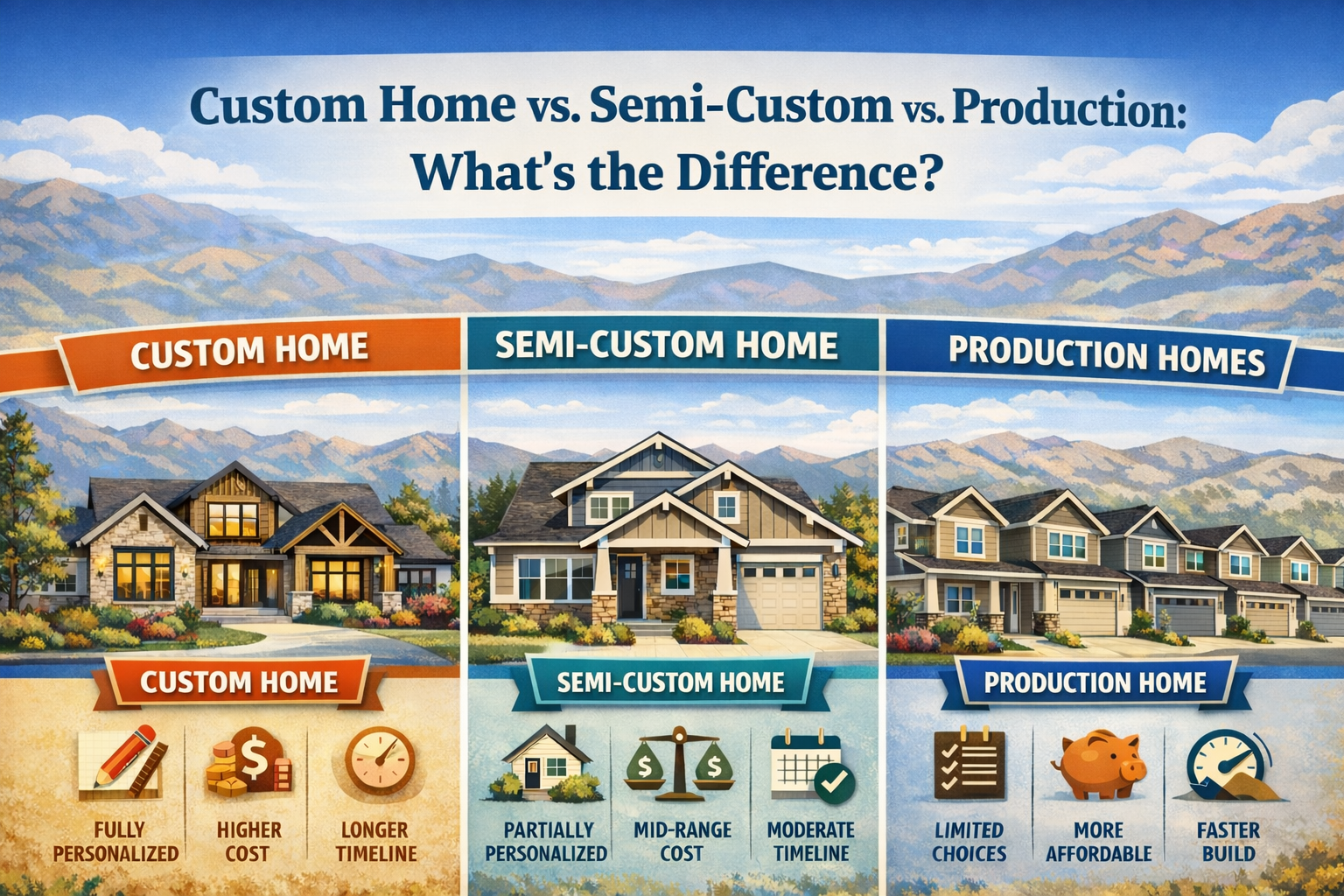
    If you’re thinking about building a new home in Idaho, one of the first big decisions you’ll face is which path to take in the custom vs semi-custom vs production home conversation.

    In other words: do you want a fully custom home designed from a blank slate, a semi-custom home based on an existing floor plan, or a production (spec) home built by a tract builder in a planned community?

    Each type of home offers a different level of design flexibility, cost, and involvement in the home-building process. Understanding those differences clearly can help you make an informed decision that better aligns with your budget, timeline, and your family’s needs.

    This guide breaks down each type of home in clear, simple terms—so you can decide which option is the best fit for your lifestyle and long-term goals in the Treasure Valley.

    What Is a Production Home?

    A production home is the simplest and most affordable type of new construction. Production homes are typically built by tract builders (CBH Homes, Hubble Homes, Lennar, etc.) who are large production home builders who work from a set of pre-designed floor plans in a subdivision or master-planned community.

    Instead of starting with a blank slate, you choose from a set of standard floor plans offered by the builder. This allows the builder to streamline the construction process, control costs, and deliver high-quality homes at lower prices with less time from contract to move-in.

    Key Features of a Production Home

    Production homes usually share several characteristics:

    • A set of floor plans or house plans to choose from
    • Pre-designed structural layouts with less flexibility for changes
    • Standard finishes with upgrade packages for things like countertops, flooring, or paint colors
    • A predictable construction process with defined stages and timelines
    • Often built on smaller or uniform lots within the same neighborhood
    • Energy efficiency measures are commonly included as part of the builder’s standard package

    Many production builds are also referred to as spec homes or spec houses, especially when the builder starts construction before a specific buyer is under contract.

    Who a Production Home Is Best Suited For

    A production house is often the right choice for a:

    • Home buyer with a strict budget who still wants a new home
    • Buyers who prefer a move-in-ready home with fewer decisions to make
    • Families that want to be in a specific subdivision, school district, or community with amenities
    • Buyer who values a streamlined path and doesn’t need a high level of personalization

    For many people, production homes are an attractive option because they offer a lower cost of entry into new home construction and a shorter amount of time between signing a contract and receiving the keys.

    Pros of a Production Home

    • Lower cost compared to custom and many semi-custom builds
    • The fastest build time of the three options
    • Fewer decisions, which means less design fatigue
    • Clear base price and upgrade options upfront

    Cons of a Production Home

    • Limited design flexibility and structural changes
    • Less control over specific design elements or special features
    • Many homes in the community may share similar home designs and exterior materials

    What Is a Semi-Custom Home?

    A semi-custom home sits in the middle of the custom vs semi-custom vs production home spectrum. It blends flexibility with structure, and it’s often the best route for buyers who want more personalization than a production home—but don’t need the complete freedom (or full cost) of a true custom home.

    With a semi-custom home, you usually start with an existing floor plan from a semi-custom builder and then adjust it to your specific needs.

    Key Features of a Semi-Custom Home

    Semi-custom builds typically include:

    • A library of pre-designed floor plans or house plans to start from
    • The ability to make layout changes, such as moving walls, adding a bedroom, or reconfiguring the kitchen
    • A wider range of design options for finishes, fixtures, and exterior materials
    • More involvement in the design process, especially in the design phase
    • A mid-range price point between production and fully custom homes

    You’ll work with a design team or semi-custom builder to ensure the home’s construction reflects your lifestyle, specific needs, and price range.

    Who a Semi-Custom Home Is Best For

    A semi-custom home is often the best fit for:

    • Buyers who want a more personalized home without going all-in on a fully custom build
    • Families who have specific ideas about layout and storage but don’t need complete control over every detail
    • People who want a smoother, more structured process than a full custom project, but more design freedom than production homes

    Pros of a Semi-Custom Home

    • Greater level of personalization than production homes
    • The ability to adapt an existing floor plan to your family’s needs
    • A clearer starting point for budget and timeline than a complete custom build
    • Often, a good “middle ground” for many home buyers

    Cons of a Semi-Custom Home

    • More decisions to make than with a production home
    • Significant changes or structural changes can add additional cost.
    • The build may still take more time than a production home, especially if you request many modifications.

    What Is a Custom Home?

    A custom home offers the highest level of customization—and the most design freedom—among the three options. Here, you’re not starting with a standard plan or existing floor plan; you’re working with a custom home builder or design-build team to create a fully custom home from the ground up.

    Custom home projects usually start with a blank slate: your land, your ideas, and a design team that helps shape them into a complete set of house plans.

    Key Features of a Custom Home

    With a whole custom home, you can expect:

    • A fully original floor plan and architectural style
    • Complete control over room sizes, layout, and overall square footage design
    • The chance to incorporate specific design elements, special features, and unique home concepts
    • Tailored solutions to your land, views, and topography—especially if you own land already
    • The ability to specify exterior materials, energy efficiency features, and final finishes

    Custom home building is ideal for buyers who want their dream home to reflect a clear vision and specific needs that standard plans can’t meet.

    Who a Custom Home Is Best For

    A true custom home is often the right choice when:

    • You already own land or want to choose the land first and design around it.
    • You have detailed ideas about layout, architectural style, and special features.
    • You’re comfortable with a longer design-build process and a higher overall budget.
    • You want a one-of-a-kind home that doesn’t look like anything else in your neighborhood.

    Pros of a Custom Home

    • Complete control over the design process and final product
    • The highest level of personalization in layout, finishes, and performance features
    • Optimized use of your land, views, and site conditions
    • Potential for higher long-term value when done well

    Cons of a Custom Home

    • Typically, the highest cost and most extensive price range
    • The amount of time from the first decision to move-in is usually the longest.
    • Requires close coordination between your custom builder, design team, and lender
    • More decisions and more complexity throughout the construction process

    Custom vs Semi-Custom vs Production Home: Side-by-Side Comparison

    When you line up custom vs semi custom vs production home options, the differences become clearer. Here’s a simplified way to think about them:

    FeatureProduction HomeSemi-Custom HomeCustom Home
    CostLowest base price / lower costMid-range, depends on changesHighest, widest price range
    Design FlexibilityLowest design flexibilityModerate level of customizationUnlimited design freedom
    TimelineFastest / less timeModerateLongest amount of time
    Floor PlansFixed set of floor plansPre-designed floor plans with modificationsFully original plans
    DecisionsFewer decisions to makeMore decisions, guided by builderMost decisions across all phases
    Best ForBudget-focused, move-in ready buyersBuyers wanting balance between cost & customizationBuyers wanting full control & unique design
    LandUsually builder-owned lotsOften can build on your own lotCommonly built on land you own or select

    This comparison can help you quickly see which path best suits your budget, timeline, and level of involvement.

    How to Choose the Right Type of Home (and Builder)

    When you’re deciding between custom vs semi-custom vs production home paths, it often helps to think in terms of:

    1. Budget and Price Range
      • If you need the lowest possible base price and a simpler path, production homes or spec homes can be an attractive option.
      • If you invest more in personalization, semi-custom builds, or full-custom homes, you can open up more possibilities.
    1. Level of Customization You Want
      • If you’re comfortable with a standard plan and a few design options, production builds may be the right route.
      • If you have specific needs for your family, a semi-custom home offers a good balance.
      • If you want complete control and a truly unique home, a fully custom build is the natural choice.
    1. Amount of Time and Involvement
      • Production homes tend to require less time and fewer decisions.
      • Semi-custom and custom houses involve more meetings, design decisions, and ongoing input, but also lead to a more personalized home.
    1. Land Situation
      • If you don’t own land and want a quick, streamlined path, production home builders with move-in-ready home options might be ideal.
      • If you already own land or want to select land first, a semi-custom builder or custom home builder can help you align the home design with your site.

    Working with the right builder is just as important as choosing the right type of home. Look for production builders, semi-custom builders, or custom builders with a track record of high-quality homes, clear communication, and expert guidance through the design-build process.

    Next Steps in Your Home Building Journey

    Choosing between custom vs semi-custom vs production home options is one of the first—and most important—decisions in the home construction journey. 

    There’s no single “right decision” that applies to everyone; instead, the best fit depends on your:

    • Budget and long-term goals
    • Desired level of design freedom
    • Willingness to be involved in the design process
    • Timeline for moving into your new home

    Idaho’s growing market offers all three paths, from production homes in master-planned communities to semi-custom builds and full custom home design on acreage or view lots.


    If you’d like expert guidance on which type of builder and which type of home is the best route for your situation, Sunrise Realty Group can help you sort through your options, clarify your priorities, and move confidently toward the home of your dreams.

    Contact us now.

    Differences between a custom vs semi custom vs production home; choose the right builder, budget, and design path for your new home in Idaho.

  • Top Floor Plan Features Idaho Homeowners Want

    Top Floor Plan Features Idaho Homeowners Want

    By Sunrise Realty Group

    As the Treasure Valley continues to grow, one thing is clear: Idaho buyers know exactly what they want in a new home. Anything from large windows that frame the state’s natural beauty to open layouts designed for family gatherings, certain floor plan features Idaho homeowners want are showing up again and again across model homes, custom builds and modern home design trends.

    Whether you’re building from the ground up or choosing a plan from a local or semi-custom builder, understanding these highly desired elements will help you choose the right floor plan—one that fits daily life, enhances resale value and elevates your overall living experience.

    The following are the top floor plan features Idaho homeowners want today.

    Top Floor Plan Features Idaho Homeowners Want

    ⭐ 1. Open-Concept Living Spaces and Great Rooms

    An open floor plan continues to be one of the most requested design elements across Idaho. Homeowners want bright and spacious living areas that bring everyone together.

    Why it works in Idaho:

    • Enhances natural light, especially with the state’s long summer evenings
    • Makes modest square footage areas feel more expansive
    • Ideal for family gatherings and dinner parties
    • Offers flexible living space arrangements for modern lifestyles

    Great rooms are now the “heart of the home,” creating a seamless flow from the kitchen to the dining and living areas.

    ⭐ 2. Large and Functional Kitchens With Oversized Islands

    In Idaho homes, the kitchen is where daily life happens. Buyers consistently choose layouts with generous workspace, smart storage and modern amenities.

    Most-wanted kitchen design features:

    • Oversized islands with seating
    • Walk-in or hidden pantries
    • Quartz or granite counters
    • Energy-efficient appliances
    • Natural materials such as stone or wood
    • Ample cabinets for a larger household size

    New homes often showcase kitchens designed to bring everyone together.

    ⭐ 3. Split-Bedroom Floor Plans for Privacy

    A split-bedroom design places the primary suite on one side and secondary bedrooms on the other—one of the strongest design trends in Idaho’s new home construction.

    Idaho buyers prefer it because it:

    • Creates privacy
    • Reduces noise transfer
    • Works perfectly with single-level layouts
    • Fits a wide range of square feet

    This is especially popular in modern mountain home designs and acreage properties.

    ⭐ 4. Dedicated Multifunctional Rooms (Flex Rooms)

    Modern lifestyles have reshaped what buyers expect from modern home designs. Home owners today usually look for spaces that can have multiple functions.

    A flex room can become:

    • A home office
    • A craft or hobby studio
    • A guest room
    • A kid’s study space
    • A small gym or meditation room

    For many buyers, this is no longer optional—it’s a specific space that is expected in the home design.

    ⭐ 5. Mudrooms With Smart Storage

    With Idaho’s weather, (snow, dust and plenty of outdoor recreation) mudrooms are now considered a core essential design feature.

    In a mudroom, homeowners usually want:

    • Built-in benches
    • Cubbies
    • Coat hooks
    • Storage for outdoor gear
    • Durable flooring
    • Space for pets

    A well-designed mudroom creates an efficient transition space from your outdoor life to your home life.

    ⭐ 6. Oversized Garages & RV Bays

    Idaho homeowners often have many things to store. Garages with optional features and additional depth are in high demand.

    Popular options include:

    • 3 or 4 car garages
    • RV or boat garages
    • Workshop areas
    • Attic trusses or storage lofts
    • Space for outdoor toys like ATVs

    Garage space is a big deal, especially in areas outside Boise where buyers tend to have more land to work with.

    ⭐ 7. Main-Level Primary Suites

    A main-level primary suite supports comfortable aging-in-place planning while increasing long-term value.

    Buyers want:

    • Large bedrooms
    • Spa-style bathrooms
    • Walk-in closets
    • Direct access to outdoor living spaces

    Outdoor living access matters as it has become a lifestyle priority in Idaho.

    ⭐ 8. Large Windows and Inside/Outside Living

    Idaho is known for its foothills, rivers, mountain views and natural environment. Homeowners want a beautiful home that showcases all that natural beauty.

    Design trends emphasize:

    • Large windows often with transom windows above
    • Sliding or accordion doors
    • Covered patios
    • Smooth flow from indoor to outdoor spaces
    • Large back door openings that allow you to bring the outside in

    The indoor/outdoor living vibe is especially popular in areas like Eagle, Star, the Boise Bench and the foothill neighborhoods.

    ⭐ 9. Walk-In Pantries and Storage Solutions

    With busy households and active lifestyles, storage is non-negotiable.

    Modern trending features are:

    • Walk-in pantries
    • Under-stair storage
    • Extra closets
    • Garage storage rooms
    • Built-in shelving
    • Closed in HVAC closets in the garage

    An interesting solution that has also become popular is to build a RV garage with shelves around the inside perimeter using a mezzanine for access to high areas.

    ⭐ 10. Multi-Generational Suites (ADU)

    More and more Idaho families are choosing to live together under one roof or open their homes to long-term guests. Whether it’s aging parents, adult children or extended family, this trend is all about creating space for connection while maintaining privacy.

    A dedicated suite (complete with its own bedroom, bathroom or even a small kitchenette) offers the flexibility to adapt to changing needs and adds significant long-term value to the home.

    Popular configurations have:

    • A private bedroom and bathroom
    • A Private entrance
    • A kitchenette

    This helps foster both independence and a strong sense of community.

    ⭐ 11. Thoughtful Laundry/Utility Room Placement

    Gone are the days of laundry rooms tucked away in awkward corners or cramped spaces. Idaho homeowners are looking for laundry areas that are multifunctional, well designed and conveniently located. Often near main living areas or bedrooms, it’s all about making everyday chores easier and more efficient.

    Popular features include:

    • Being near the primary suite (often accessible from the walk-in closet)
    • Separate but near the mudroom
    • Possibly used for cleaning pets with a built in dog wash
    • Large wash basin for cleaning things you don’t want drug though the house like muddy clothes

    Modern expectations in a laundry/utility room and built-in cabinets, hanging rods and folding areas.

    ⭐ 12. Single-Level Floor Plans

    Single-level homes are preferred in the Treasure Valley by home owners to avoid the stairs of a two-story home.

    Benefits include:

    • Easy accessibility
    • Better energy efficiency
    • Open spaces
    • Safer for kids and older adults

    It is important to note that building a single story home often is more expensive than building a two story home. Since the home is spread out on the property rather than being stacked, additional concrete and lumber would be required to build the home.

    ⭐ Final Thoughts

    Choosing the right floor plan comes down to how you live, what you value and the Idaho lifestyle you want to embrace. The most popular floor plan features Idaho homeowners want blend comfort, smart design, modern amenities and a strong connection to nature. They also contribute to energy efficiency, enhanced resale value and long-term enjoyment of your home.

    Thinking about building a custom home or exploring new construction? The Sunrise Realty Group is here to walk you through it all. Whether it’s finding the right layout or adding outdoor living spaces and modern design features, we will make the process simple and stress free.

    Ready to get started? Reach out anytime to tour model homes, talk about your goals or start planning your next move in Idaho’s booming real estate market.