Category: Curiosities

  • Autism Awareness vs. Acceptance: Why April Matters More Than You Think

    Autism Awareness vs. Acceptance: Why April Matters More Than You Think

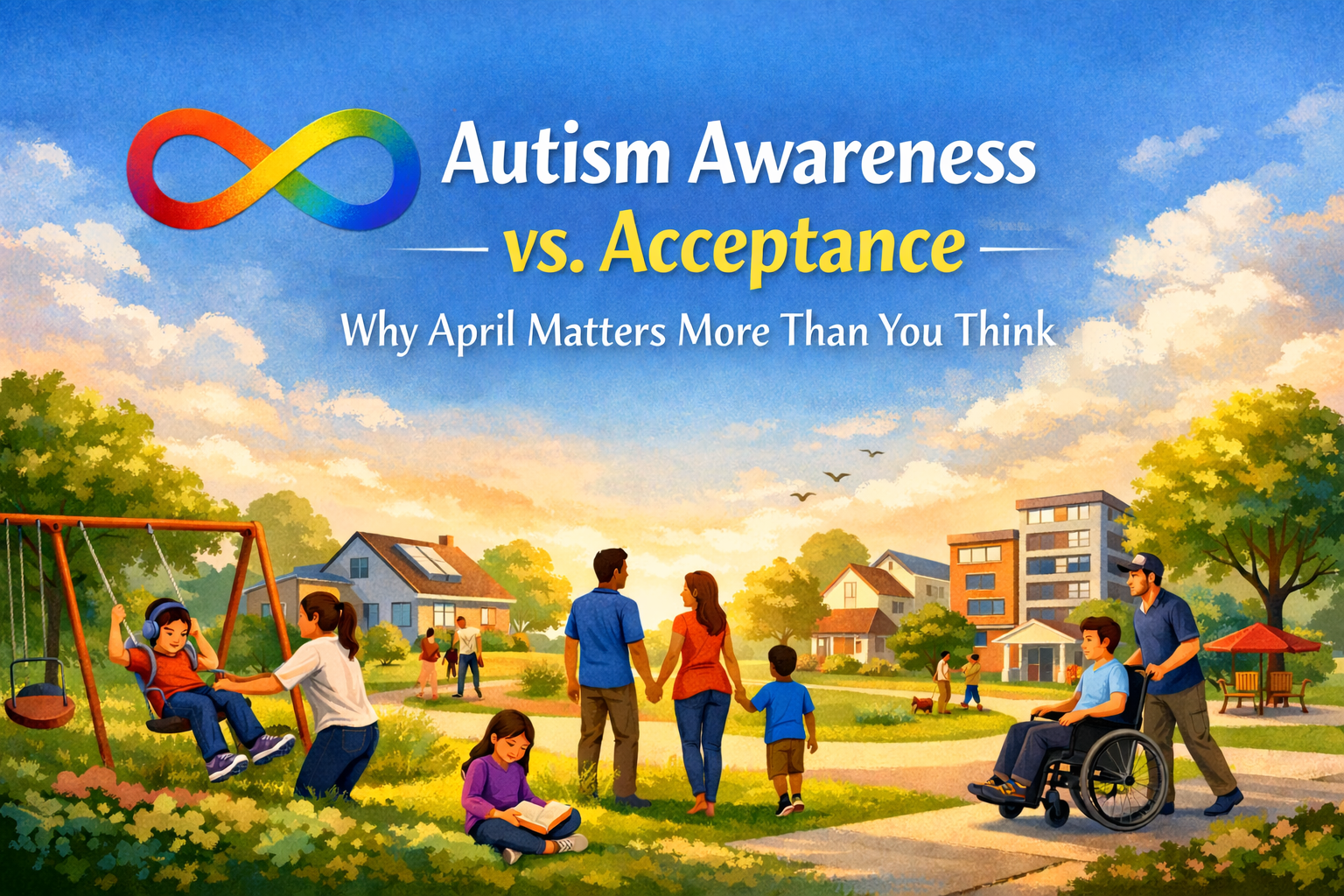
    The month of April as of late, is still widely associated with autism awareness. But more organizations, advocates, and autistic voices now push the conversation further toward autism acceptance. That shift matters  but what is autism awareness vs acceptance?


    Awareness means people know autism exists. ‘Acceptance’ means people are willing to put effort into building spaces, communities, and daily environments where autistic individuals feel respected, included, and supported.


    That distinction is bigger than wording. It changes how people think about schools, workplaces, neighborhoods, and homes. It determines whether someone is merely acknowledged or truly considered when spaces are designed and communities are shaped.


    What Is Autism?

    Autism Spectrum Disorder, or ASD, is a well-known developmental disability that can affect communication, behavior, and social interaction.


    The word spectrum matters because autism does not look the same from one person to the next. Support needs, communication styles, sensitivities, routines, and strengths associated with ASD can vary widely.


    Some autistic people need significant day-to-day support. Others live independently, work, raise families, and move through the world without fitting the stereotypes many people still carry. 


    What they have in common is that they deserve to be understood as people, not reduced to assumptions.


    Autism Awareness vs. Acceptance


    For a long time, April’s conversations centered on awareness. That helped bring autism into public view, but awareness on its own has limits. It can stop at recognition without ever reaching understanding.


    Acceptance asks more of people; shows up in whether schools are supportive, whether workplaces make room for different needs, and whether communities feel welcoming in everyday life. It also means listening to autistic people instead of deciding for them, and over them, what their support should look like.


    That is why acceptance feels different from symbolism. Real acceptance is forever tethered to inclusion, respect, and the way people are treated in real situations, not just the language used around them. Groups like ASAN have helped push that conversation forward by framing acceptance as something lived out in real life.


    The shift from autism awareness vs. acceptance matters. One says, “We know.” The other says, “We are willing to make room.”


    Why This Matters in Real Estate and Community Design


    At first glance, autism acceptance may not seem like a real estate topic. It is.

    Real estate is not just about bedrooms, bathrooms, or square footage. It is also about how a home feels, how a neighborhood functions, and whether a space supports the people living in it. 


    For many families, that includes sensory needs, routine, noise levels, school proximity, traffic patterns, outdoor access, and whether a home feels calming or overstimulating.


    That is part of what makes this conversation so relevant in Boise and across the Treasure Valley. Buyers are not just choosing a property. They are choosing an environment.


    Some buyers may barely notice bright lighting, echo-heavy rooms, or a layout that feels busy. For others, those details can make a home feel draining instead of comfortable.


    The same is true outside the home. A neighborhood with heavy traffic, limited green space, and few quiet spots may feel exciting to one person and overstimulating to another.


    Subjective? Maybe to some. But acceptance means understanding that these differences are real and worth respecting.


    Supportive Home Design Is Not Just a Niche Idea


    Thoughtful design can go a long way for autistic individuals and families, but it also tends to make a home feel better for everyone living there.


    A quiet flex room can offer a place to reset. Natural light often feels softer than harsh overhead lighting.


    Better insulation can help cut down on noise. A layout that feels straightforward can make daily life less stressful. And when storage keeps clutter under control, the whole home can feel calmer and easier to manage.


    This isn’t targeted at adding unnecessary extras, it’s more about creating a home that feels more livable day to day.


    This is one reason home design deserves more attention in conversations about inclusion.


    Buyers are not only asking what a home looks like; they are also asking what a home feels like. They are asking how it works, how it feels, and whether it supports the life that actually happens inside it.


    Community Matters Too


    Acceptance does not, and should not, stop at your front door.


    A supportive community may include access to parks, quieter streets, walkability, nearby services, and environments that do not feel constantly overwhelming. Finding a property within said community may mean thinking beyond just basic ‘curb appeal’ and asking harder questions about what daily life in a neighborhood will actually be like.


    That is especially important for families who are already navigating sensory sensitivities, changing routines, or educational and support needs. A home can be beautiful on paper and still be the wrong fit if the surrounding environment makes everyday life harder.


    Real estate professionals do not need to pretend to be clinicians or experts in autism to understand this. But they should be thoughtful enough to recognize that families experience homes differently, and that good guidance sometimes means paying attention to more than the listing sheet.


    The Shift Away From the Puzzle Piece


    This conversation also shows up in the symbols people use to represent autism.


    For a long time, the puzzle piece was commonly associated with autism. But many autistic people and advocates have said it feels outdated or uncomfortable, especially because it can suggest that something is missing or needs to be fixed.


    The infinity symbol has become a more widely accepted alternative. It reflects diversity, inclusion, and the wide range of autistic experiences. That change mirrors the larger shift away from simple awareness and toward acceptance.


    Even choices like symbols, language, and imagery can say a lot. They help shape whether people feel respected and understood, or misunderstood before the conversation even begins.


    Building Better Communities Starts With Understanding


    At Sunrise Realty Group, we believe home is deeply personal. It is not just where you sleep. It is where routines happen, where families regulate stress, where kids grow up, and where people should feel safe being fully themselves.


    That is one reason this conversation belongs in real estate.


    When we talk about autism acceptance, we are also talking about how communities are built, how homes are chosen, and whether the environments around us are designed with real people in mind.


    Awareness may be where the conversation starts, but acceptance is where it begins to matter.


    Final Thoughts


    Autism Acceptance Month is a reminder that inclusion should not stop with April. It should carry into the way we think about people, homes, and the communities we live in all year long.


    A lot of the conversation around acceptance comes back to understanding, inclusion, and real support. That is a stronger approach than simply acknowledging autism without changing how people are treated.


    In real estate, that matters more than some people realize. It affects the questions we ask, the homes we point people toward, and the communities we help families become part of. When we think more carefully about what makes a home feel safe, comfortable, and functional, we are doing more than helping someone buy a house.


    We help them find a place where they can truly belong.
    Autism Awareness vs Acceptance: April is a reminder that inclusion isn’t a trend—it’s a responsibility. Choose Acceptance


  • Why Do We Have the Easter Bunny and Egg Hunts? The History Behind Easter Traditions

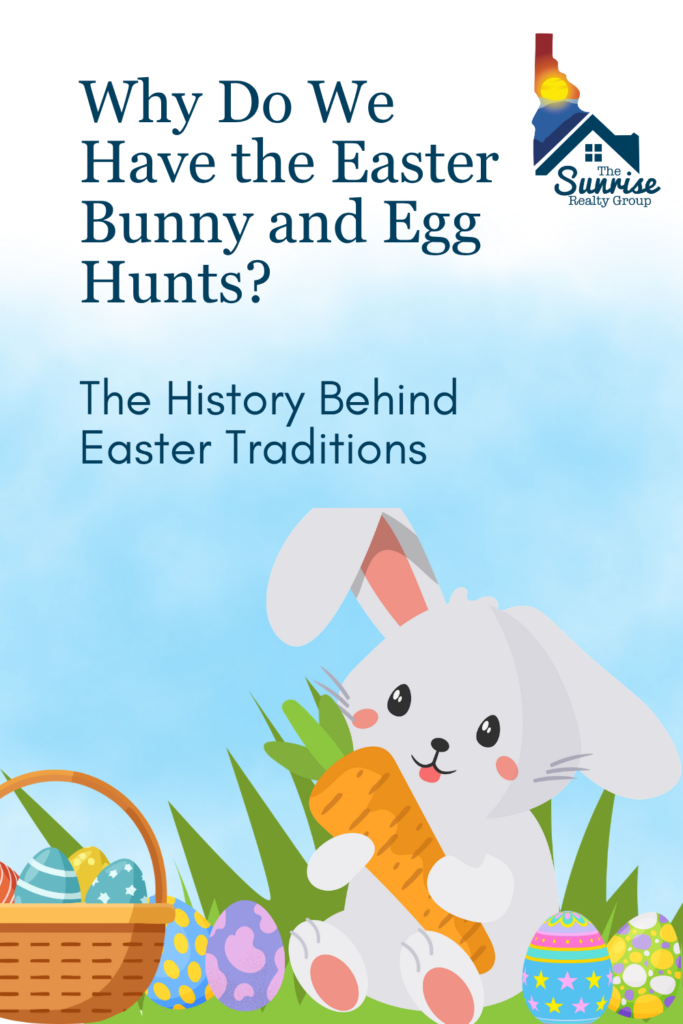
    Why Do We Have the Easter Bunny and Egg Hunts? The History Behind Easter Traditions

    Every spring, families far and wide celebrate Easter with dyed eggs, baskets, and backyard games. And of course, who could forget the familiar image of the Easter Bunny? For many of us, those traditions feel so normal that we never stop to ask where they came from. The story behind the Easter Bunny and egg hunts is older and more layered than most people realize.

    Easter is a Christian holiday centered on resurrection, hope, and new life. At the same time, many of the customs people now associate with the season were shaped by older spring traditions, cultural folklore, and family celebrations that changed over time. When you look at the history of Easter traditions, you can see how religious meaning, seasonal symbolism, and community rituals gradually blended into one holiday.

    The Meaning of Easter and the Connection to Spring

    At its core, Easter marks the resurrection of Jesus Christ and carries strong themes of renewal, hope, and new beginnings. That message already fits naturally with spring, when colder weather begins to lift, and the landscape starts to change again.

    It is easy to see why that connection has lasted. Spring has always been tied to growth, fresh starts, and life returning after winter. Trees begin to bud, lawns green up, and people start coming back outside. Because of that, it made sense for Easter traditions to absorb symbols that already represented rebirth and abundance.

    That is one reason the history of Easter traditions does not come from a single source. The holiday itself has a clear Christian meaning, but some of the symbols surrounding it originated in older customs later adopted into Easter celebrations.

    Why Eggs Became Part of Easter Traditions

    Long before folks dyed Easter eggs in bright colors or hid them in the grass, eggs already carried strong symbolic meaning. In many cultures around the world, eggs represented life, fertility, and the start of new beginnings. That symbolism made them a natural fit for spring festivals; a time full of new life and new beginnings.

    As Christianity spread across Europe, eggs took on added significance in Easter traditions. They became associated with new life and resurrection, which helped connect an older seasonal symbol to the Christian message of Easter. Over time, that symbolic link stuck.

    There was also a practical reason eggs became part of the holiday. During Lent, many Christians historically avoided foods like meat, dairy, and eggs. When Easter arrived, eggs became part of the celebration again. People would boil, preserve, decorate, and serve them as part of the feast.

    Over time, these decorated eggs, once simple now elaborately adorned with color, moved from a meaningful seasonal food to one of the most recognizable Easter traditions.

    That shift helps explain why eggs still hold such a central place in Easter today. Even in modern celebrations, they continue to symbolize renewal, family tradition, and the arrival of spring.

    Where the Easter Bunny Came From

    The origin of the Easter Bunny is one of the most curious parts of the holiday. The bunny itself does not come from the biblical Easter story. Instead, it appears to come from European folklore, tied to spring and fertility.

    Before the modern Easter Bunny took shape, the hare was already a strong seasonal symbol in parts of Europe. Because rabbits and hares reproduce quickly, they became associated with abundance, fertility, and the energy of spring. That made them an easy fit for celebrations centered on the season.

    The version most people recognize today is often connected to German folklore. In that tradition, parents told children about an Easter hare, sometimes called the Osterhase, that would leave eggs for them to find.

    When German immigrants brought that custom to early America, the story gradually changed and spread. The hare became a bunny, the custom became more child-focused, and the Easter Bunny grew into a nationwide symbol of the holiday.

    That evolution is part of what makes the Easter Bunny’s history so interesting. It was not created all at once. It developed over generations as traditions moved between countries, families, and communities.

    How Easter Egg Hunts Became a Tradition

    The story of egg hunts makes even more sense once you connect eggs and the Easter hare. If children were already being told that a magical hare left eggs behind, it was only natural for families to turn that idea into an activity.

    At first, the tradition was simple. Adults hid eggs, children searched for them, and the act itself became part of the celebration. Over time, that custom grew into organized egg hunts at homes, churches, parks, and community events. What may have started as a small folk tradition eventually became one of the most familiar Easter activities in the United States.

    There are a few reasons egg hunts became so popular. They are easy to organize, fun for kids, and flexible enough to work in almost any setting. They also fit the holiday’s emotional tone. Easter is tied to joy, family, and fresh beginnings, and egg hunts give people a playful way to experience that together.

    Today, the tradition may look a little different. Some families use real dyed eggs, while others hide plastic eggs filled with candy or toys. But the basic idea has stayed the same, which is why Easter Bunny and egg hunts still feel so connected in the modern celebration.

    The History of Easter Traditions Is a Blend, Not One Single Story

    One reason people ask why we have the Easter Bunny and egg hunts is that the traditions can feel unrelated at first glance. But when you look at them historically, they begin to fit together.

    Easter itself carries Christian meaning centered on resurrection and hope. Eggs have long symbolized life and rebirth. The hare came from European spring folklore. Egg hunts grew from the custom of children searching for eggs left by the Easter hare. Over time, those pieces blended into one holiday tradition that families still recognize today.

    That is really the best way to understand the history of Easter traditions. It is not a straight line. It is a layered story shaped by religion, folklore, seasonal customs, and family practice.

    Why These Easter Traditions Still Matter Today

    Even now, Easter tends to mark a shift in the year. In places like Boise, Meridian, Eagle, and across the Treasure Valley, spring brings people back outdoors and fills the calendar with family events, local celebrations, and neighborhood gatherings. Easter often lands right in the middle of that seasonal reset.

    That is part of why these traditions still continue to resonate. They are not only about the past. They also reflect what people still want from this time of year: connection, renewal, and a sense of forward movement.

    Whether someone is planning a family gathering, taking on spring projects, or thinking about a fresh start, Easter arrives at a moment when many people are already looking ahead.

    Final Thoughts on the Easter Bunny and Egg Hunts

    So, why do we have the Easter Bunny and egg hunts?

    Easter traditions were shaped over time by multiple influences. The religious meaning of Easter, the symbolism of eggs, the folklore of the spring hare, and the joy of family celebration all came together to create the holiday people know today.

    That is why the Easter Bunny still shows up every spring. That is why egg hunts remain a favorite tradition. And that is why Easter continues to feel like more than just one day on the calendar. For many families, it still represents renewal, celebration, and the start of a new season.

    Thinking About a Fresh Start This Spring?

    Spring has a way of getting people to think about what comes next. Sometimes that means cleaning up a yard, showing up for community events, or making new plans for the months ahead. Sometimes it means thinking bigger.

    If this season has you thinking about a fresh start in Boise or anywhere in the Treasure Valley, Sunrise Realty Group is here to help you take the next step with confidence.

    Learn the history behind the Easter Bunny and egg hunts, and how Easter traditions grew from faith, folklore, and springtime celebration.