The month of April as of late, is still widely associated with autism awareness. But more organizations, advocates, and autistic voices now push the conversation further toward autism acceptance. That shift matters but what is autism awareness vs acceptance?
Awareness means people know autism exists. ‘Acceptance’ means people are willing to put effort into building spaces, communities, and daily environments where autistic individuals feel respected, included, and supported.
That distinction is bigger than wording. It changes how people think about schools, workplaces, neighborhoods, and homes. It determines whether someone is merely acknowledged or truly considered when spaces are designed and communities are shaped.
What Is Autism?
Autism Spectrum Disorder, or ASD, is a well-known developmental disability that can affect communication, behavior, and social interaction.
The word spectrum matters because autism does not look the same from one person to the next. Support needs, communication styles, sensitivities, routines, and strengths associated with ASD can vary widely.
Some autistic people need significant day-to-day support. Others live independently, work, raise families, and move through the world without fitting the stereotypes many people still carry.
What they have in common is that they deserve to be understood as people, not reduced to assumptions.
Autism Awareness vs. Acceptance
For a long time, April’s conversations centered on awareness. That helped bring autism into public view, but awareness on its own has limits. It can stop at recognition without ever reaching understanding.
Acceptance asks more of people; shows up in whether schools are supportive, whether workplaces make room for different needs, and whether communities feel welcoming in everyday life. It also means listening to autistic people instead of deciding for them, and over them, what their support should look like.
That is why acceptance feels different from symbolism. Real acceptance is forever tethered to inclusion, respect, and the way people are treated in real situations, not just the language used around them. Groups like ASAN have helped push that conversation forward by framing acceptance as something lived out in real life.
The shift from autism awareness vs. acceptance matters. One says, “We know.” The other says, “We are willing to make room.”
Why This Matters in Real Estate and Community Design
At first glance, autism acceptance may not seem like a real estate topic. It is.
Real estate is not just about bedrooms, bathrooms, or square footage. It is also about how a home feels, how a neighborhood functions, and whether a space supports the people living in it.
For many families, that includes sensory needs, routine, noise levels, school proximity, traffic patterns, outdoor access, and whether a home feels calming or overstimulating.
That is part of what makes this conversation so relevant in Boise and across the Treasure Valley. Buyers are not just choosing a property. They are choosing an environment.
Some buyers may barely notice bright lighting, echo-heavy rooms, or a layout that feels busy. For others, those details can make a home feel draining instead of comfortable.
The same is true outside the home. A neighborhood with heavy traffic, limited green space, and few quiet spots may feel exciting to one person and overstimulating to another.
Subjective? Maybe to some. But acceptance means understanding that these differences are real and worth respecting.
Supportive Home Design Is Not Just a Niche Idea
Thoughtful design can go a long way for autistic individuals and families, but it also tends to make a home feel better for everyone living there.
A quiet flex room can offer a place to reset. Natural light often feels softer than harsh overhead lighting.
Better insulation can help cut down on noise. A layout that feels straightforward can make daily life less stressful. And when storage keeps clutter under control, the whole home can feel calmer and easier to manage.
This isn’t targeted at adding unnecessary extras, it’s more about creating a home that feels more livable day to day.
This is one reason home design deserves more attention in conversations about inclusion.
Buyers are not only asking what a home looks like; they are also asking what a home feels like. They are asking how it works, how it feels, and whether it supports the life that actually happens inside it.
Community Matters Too
Acceptance does not, and should not, stop at your front door.
A supportive community may include access to parks, quieter streets, walkability, nearby services, and environments that do not feel constantly overwhelming. Finding a property within said community may mean thinking beyond just basic ‘curb appeal’ and asking harder questions about what daily life in a neighborhood will actually be like.
That is especially important for families who are already navigating sensory sensitivities, changing routines, or educational and support needs. A home can be beautiful on paper and still be the wrong fit if the surrounding environment makes everyday life harder.
Real estate professionals do not need to pretend to be clinicians or experts in autism to understand this. But they should be thoughtful enough to recognize that families experience homes differently, and that good guidance sometimes means paying attention to more than the listing sheet.
The Shift Away From the Puzzle Piece
This conversation also shows up in the symbols people use to represent autism.
For a long time, the puzzle piece was commonly associated with autism. But many autistic people and advocates have said it feels outdated or uncomfortable, especially because it can suggest that something is missing or needs to be fixed.
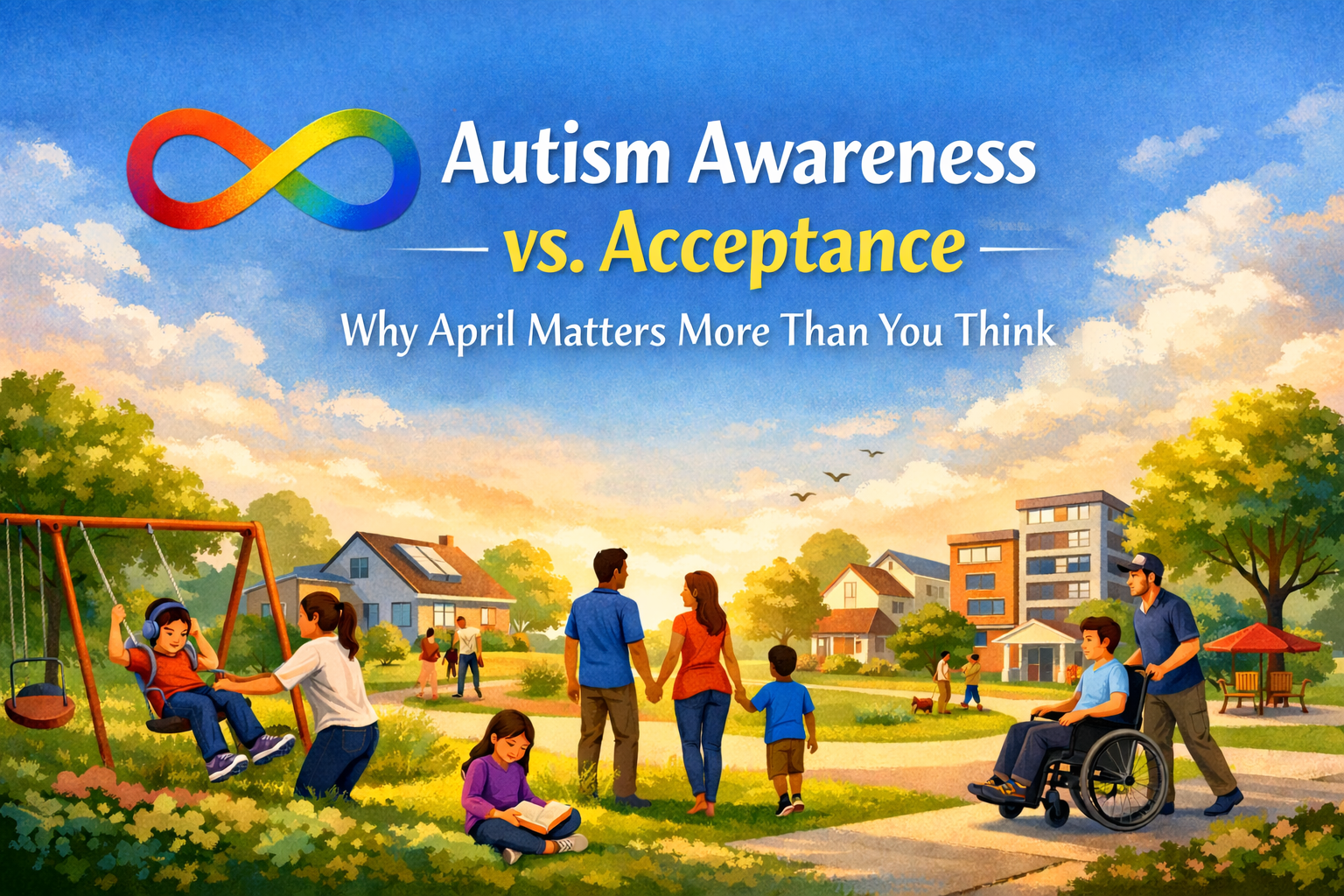
The infinity symbol has become a more widely accepted alternative. It reflects diversity, inclusion, and the wide range of autistic experiences. That change mirrors the larger shift away from simple awareness and toward acceptance.
Even choices like symbols, language, and imagery can say a lot. They help shape whether people feel respected and understood, or misunderstood before the conversation even begins.
Building Better Communities Starts With Understanding
At Sunrise Realty Group, we believe home is deeply personal. It is not just where you sleep. It is where routines happen, where families regulate stress, where kids grow up, and where people should feel safe being fully themselves.
That is one reason this conversation belongs in real estate.
When we talk about autism acceptance, we are also talking about how communities are built, how homes are chosen, and whether the environments around us are designed with real people in mind.
Awareness may be where the conversation starts, but acceptance is where it begins to matter.
Final Thoughts
Autism Acceptance Month is a reminder that inclusion should not stop with April. It should carry into the way we think about people, homes, and the communities we live in all year long.
A lot of the conversation around acceptance comes back to understanding, inclusion, and real support. That is a stronger approach than simply acknowledging autism without changing how people are treated.
In real estate, that matters more than some people realize. It affects the questions we ask, the homes we point people toward, and the communities we help families become part of. When we think more carefully about what makes a home feel safe, comfortable, and functional, we are doing more than helping someone buy a house.
We help them find a place where they can truly belong.